
Low Cost Ideas for Neighborhood Social Gatherings
Table of Contents
- Low Cost Ideas for Neighborhood Social Gatherings That Actually Work
- Free Community Event Ideas That Draw a Crowd
- Community Potluck Ideas That Feed the Block
- Inclusive Community Event Ideas for Every Neighbor
- Your Neighborhood Event Planning Checklist
- How to Spread the Word About Neighborhood Gatherings
- Conclusion
- Frequently Asked Questions
Last Updated: October 7, 2026
Low Cost Ideas for Neighborhood Social Gatherings That Actually Work
The best block parties I’ve ever produced didn’t have a budget. They had a plan, a few committed neighbors, and someone willing to knock on doors. That’s the whole secret behind low cost ideas for neighborhood social gatherings: the money was never the point. The connection is.
At Reach LA Angels, we’ve spent years watching which community events actually pull people out of their homes and which ones fizzle by 6 p.m. The difference is rarely money. It’s intention.
Below, we’ll break down what works, what wastes your time, and how to plan a gathering your neighbors will still be talking about next month.
The gatherings that draw the biggest crowds are the ones with the lowest barrier to entry. Free, familiar, and easy to walk to beats fancy every single time.
Free Community Event Ideas That Draw a Crowd
Free community event ideas work because they remove the one question that keeps people home: “Is this worth my money?” When the answer is “it costs nothing,” neighbors show up just to see what’s happening.
Here’s what fills a block:
- A neighborhood walk-and-talk. Pick a Saturday morning. Meet at the corner. Walk together for an hour.
- Outdoor movie night. A white sheet, a projector, and lawn chairs. Everyone brings their own snacks.
- A kids’ bike parade. Decorations from the dollar store. Parents line the street and cheer.
- A plant or seed swap. Gardeners trade cuttings and extra seedlings on a driveway.
- A talent showcase. Poetry, dance, spoken word, a cousin who plays saxophone. Keep it open-mic style.
- A cleanup-and-cookout combo. Two hours of picking up litter, then food on the grill.
The throughline? None of these need a permit, a vendor, or a stage. They need a date and one person willing to send the group text.
One mistake I see constantly: organizers try to do too much for the first event. Start small. A 20-person walk that goes well beats a 200-person festival that flops.
Community Potluck Ideas That Feed the Block
Community potluck ideas are the backbone of neighborhood gatherings. Everyone contributes, nobody carries the whole load, and the food becomes the conversation.
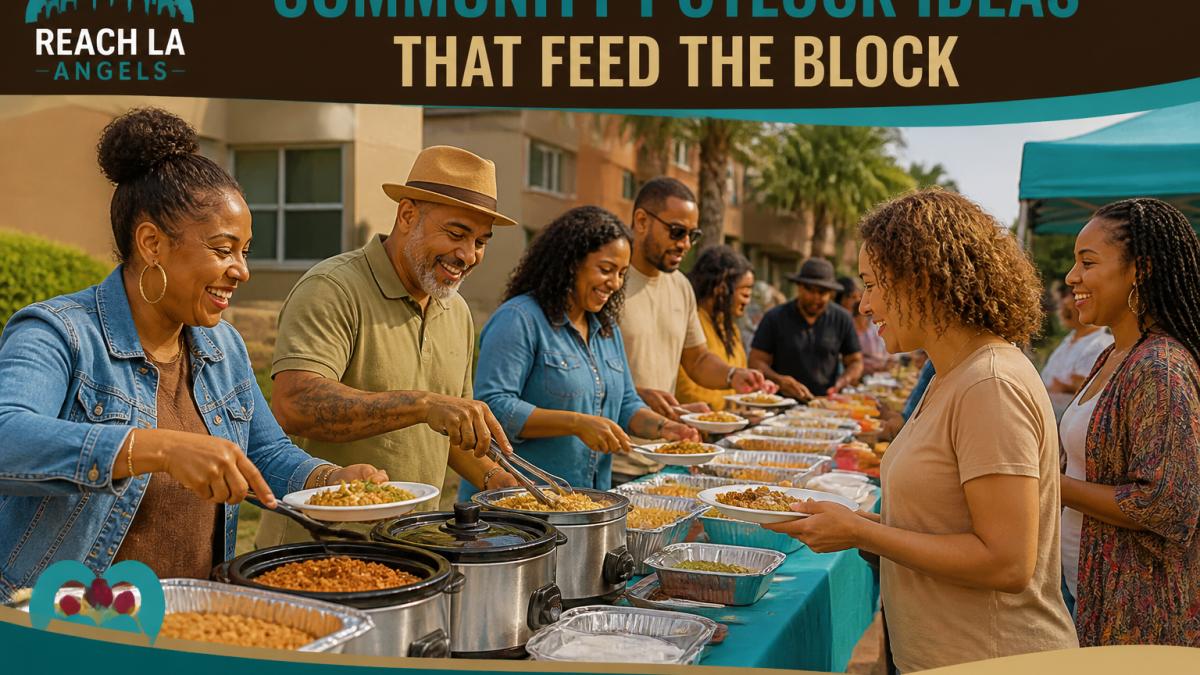
Here’s how to run one that actually works:
- Assign categories, not dishes. “Bring a side,” “bring a main,” “bring a dessert.” This prevents twelve people showing up with chips.
- Set up a sign-up sheet. A shared note on your phone works fine. People commit when they see gaps.
- Label everything. Index cards with the dish name and ingredients help guests with allergies.
- Bring your own chair. State it upfront. It takes pressure off the host.
- Keep it outside. A driveway, courtyard, or park pavilion keeps cleanup simple.
The potluck format also solves a real problem: it lets families who can’t afford to cater still host something meaningful. Everyone eats. Everyone contributes something, even if it’s paper plates.
Assign one person as the “flow” host. Their only job is introducing people who don’t know each other. That single role changes the whole energy of a potluck.
Inclusive Community Event Ideas for Every Neighbor
Inclusive community event ideas start with one question: who’s missing from the room?
If your gathering only reaches the same ten people every time, it’s not a community event. It’s a reunion.
What to build in:
- Accessible locations. Ground-floor spaces, paved paths, and seating for elders.
- Multiple languages. A welcome sign in the languages your block actually speaks.
- Kid-friendly and elder-friendly zones. Quiet space matters as much as the loud one.
- Food that respects dietary needs. Halal, vegetarian, and no-pork options aren’t extras. They’re basics.
- A no-alcohol option. Some neighbors don’t drink. Some are in recovery. Make it normal to skip.
The real test is whether a first-timer feels like they belong within ten minutes. If they’re standing alone by the trash cans, the event failed them, not the other way around.
Reach LA Angels was built around this idea. Our platform spotlights community-driven events across the city, with a focus on uplifting Black and Brown communities and the organizers who serve them. If your event is genuinely for the neighborhood, it belongs on the calendar.
Your Neighborhood Event Planning Checklist
A neighborhood event planning checklist keeps you from scrambling the day of. Here’s the one I’d hand any first-time organizer.
- Pick a date and a backup rain date
- Choose a location that’s walkable for most neighbors
- Confirm whether you need a permit for park or street use
- Recruit 2-3 helpers before you announce anything
- Set a simple budget and decide who covers what
- Create a sign-up sheet for food, chairs, and supplies
- Design one flyer and one digital graphic
- Post to your neighborhood group and community boards
- Send a reminder 48 hours before
- Assign someone to take photos
- Plan the cleanup crew in advance
- Follow up with a thank-you post after
| Phase | Timing | Key Action |
|---|---|---|
| Plan | 3-4 weeks out | Lock date, location, helpers |
| Promote | 2 weeks out | Flyers, group posts, invites |
| Confirm | 48 hours out | Reminders and supply check |
| Run | Day of | Welcome guests, keep flow |
| Follow up | 1-2 days after | Thank-yous and photos |
That last row matters more than people think. A follow-up post turns one event into a series.
How to Spread the Word About Neighborhood Gatherings
Spreading the word is where most organizers underperform. They post once and assume people saw it.
They didn’t.
What actually works:
- Post in multiple places. Group chats, community boards, local coffee shop bulletin boards, and event platforms.
- Ask neighbors to share. One reshare from a trusted neighbor beats ten paid posts.
- Use a real event listing. A dedicated page with date, time, and location gives people something to save and share.
- Go door to door for the first one. Yes, actually. It works.
- Follow up. A reminder two days before lifts turnout more than any flyer.
This is where a platform like Reach LA Angels earns its keep. We connect local organizers with people actively looking for authentic neighborhood events. You post once, and it reaches an audience already searching for what you’re hosting. If you want that reach to stretch further, our Event Promotion Services put your gathering in front of neighbors who are already out looking for something to do.
Posting only on one social channel is the fastest way to a half-empty event. If your audience lives in three places, your announcement needs to live in three places too.
Conclusion
The hardest part of hosting isn’t the food or the flyers. It’s believing your block wants to connect and giving them a reason to show up. Start with one simple gathering. Then do it again next month.
Reach LA Angels helps you get the word out with curated event listings, a platform built to spotlight local creators, and a community that shows up for authentic cultural experiences. Post your event and let the neighborhood find you.
Frequently Asked Questions
What are some low-cost ideas for neighborhood social gatherings?
Start with what you already have. A driveway movie night using a projector and bedsheets costs almost nothing. A block potluck where everyone brings one dish spreads the food cost across every household. A Saturday morning walking group or a front-yard game night needs zero planning budget. The gatherings that work best are the ones that repeat monthly, so a small effort adds up to real relationships.
How do you plan a neighborhood gathering on a tight budget?
Pick a free public space, set a date two to three weeks out, and keep the format simple. Ask two or three neighbors to co-host so the work and cost are shared. Use free channels like group texts, flyers, and community boards instead of paid promotion. A neighborhood event planning checklist helps you track permits, food, supplies, and outreach so nothing slips through.
What food works well for a neighborhood potluck?
Dishes that hold up outdoors and serve many people work best. Think slow-cooker beans, rice, pasta salad, grilled vegetables, and sheet-pan chicken. Ask guests to label their dishes with ingredients so people with dietary needs can choose safely. Assign categories by last name or block so you do not end up with twelve desserts and no main dishes.
How can a neighborhood event feel welcoming to people from different backgrounds?
Inclusive community event ideas start with the invitation. Use plain language, offer activities for kids and elders, and choose a location that is easy to reach without a car. Let neighbors share a song, a recipe, or a story from their culture if they want to. Food, music, and games cross language barriers faster than any icebreaker.