
How to Increase Event Visibility for Small Creators
Table of Contents
- Why Event Visibility Matters More Than Ever for Small Creators
- How to Grow Event Audience on Social Media
- Event Marketing Templates for Small Creators
- Best Social Media Tools for Event Promotion
- Local Influencer Marketing for Events: A Zero-Budget Playbook
- Step-by-Step: Your 30-Day Event Visibility Plan
- How to Measure Event Visibility and Turn Attendees Into Advocates
- Conclusion
- Frequently Asked Questions
Last Updated: September 16, 2026
Why Event Visibility Matters More Than Ever for Small Creators
Event visibility is the measurable presence your event has across the channels your audience actually uses, from social feeds to search results to word of mouth. Without it, even a well-produced event plays to an empty room. We’ve watched too many talented creators build something beautiful and then wonder why nobody showed up.
Here’s the hard truth: the big platforms dominate discovery because they can outspend you. You can’t beat them on budget. You beat them on strategy, consistency, and community.
Most small creators treat promotion as a last-minute checklist. That’s backwards. Visibility starts the day you decide to host, not the week before.
The creators who fill rooms aren’t the ones with the biggest budgets. They’re the ones who start promoting early, post consistently, and give their community a reason to share.
How to Grow Event Audience on Social Media
Growing an event audience on social media comes down to three things: consistency, platform fit, and real engagement. Posting once won’t move ticket sales. Showing up daily with content your people actually want will.
Start with a content rhythm you can sustain. A common approach is three to five posts a week in the weeks leading up to your event, mixing behind-the-scenes clips, vendor spotlights, and countdown reminders.
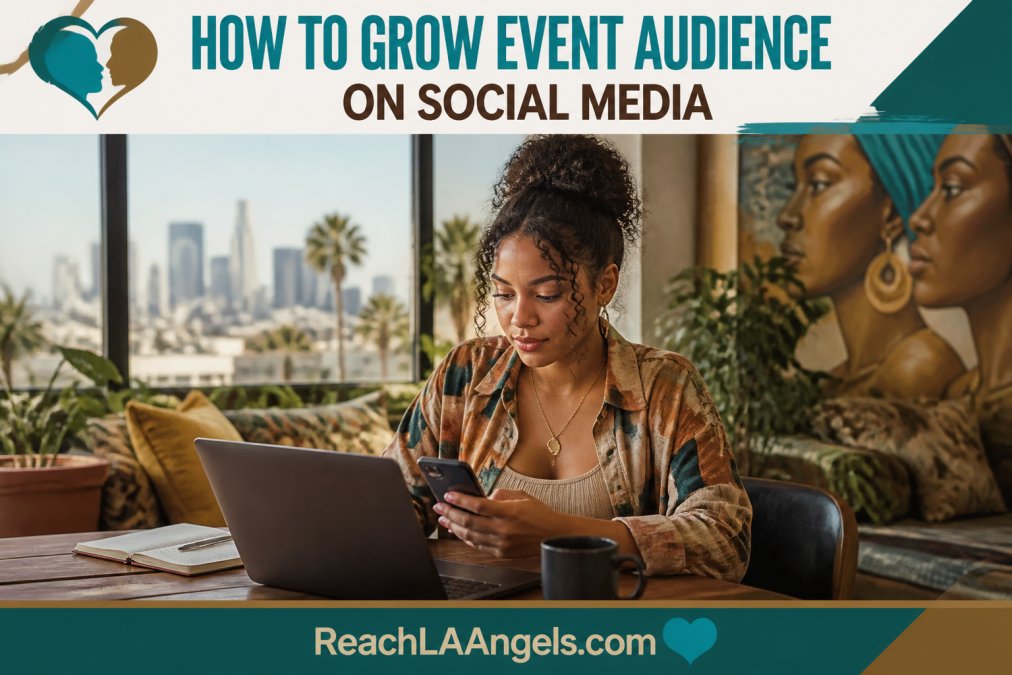
Engagement beats reach. Ten comments from real locals will do more for your event than a thousand passive impressions. Reply to every comment. Ask questions. Tag your vendors and partners so their audiences see your event too.
Platform-Specific Visibility Algorithms You Need to Know
Each platform rewards different behavior, and knowing the rules changes your results.
- Instagram: Prioritizes saves, shares, and watch time on Reels. Post vertical video, use local hashtags, and add a clear call to action.
- TikTok: Rewards watch time and rewatches. Short, punchy clips of your event setup or past highlights perform best.
- Facebook: Favors posts that spark comments and shares, especially inside local community groups.
- X: Rewards replies and reposts. Good for real-time updates on the day of your event.
The mistake most creators make is posting the same content everywhere. Tailor each post to the platform, and your reach grows without a single dollar spent.
Event Marketing Templates for Small Creators
Templates save time and keep your messaging consistent. You don’t need fancy software. You need a structure you can fill in fast and a rhythm for when each post goes out.
Here’s a caption template you can use today:
[Hook line about the vibe] 🎶
[One sentence on what makes this event different]
📍 [Venue name and neighborhood]
📅 [Date and time]
🎟️ [How to get in]
Tag a friend who needs this in their life. 👇
For a countdown post:
[X] days until [event name].
Here’s what you’re walking into: [one-line teaser].
Link in bio. Don’t wait on this one.
For a vendor or performer spotlight:
Meet [name]. [One line on what they bring to the room.]
They’ll be set up at [event name] on [date]. Come show love. 🤝
For a day-of story frame:
Doors at [time]. We’re at [venue]. Pull up. 🎟️
Match the Template to the Platform
The same event needs different cuts for different feeds.
- Instagram Reels: Lead with motion in the first second. A setup clip, a vendor arranging product, a performer warming up. Caption stays short; put the details in the first comment if you need room.
- TikTok: Open mid-action, not with a title card. Native text on screen beats a polished graphic. Keep it under 30 seconds unless the story earns the length.
- Facebook: Longer captions work here, especially inside local community groups. Write it like a personal invite, not an ad.
- X: One line, one link, one ask. Best for day-of updates and last-call reminders.
The Post-Event Template Most Creators Skip
This is the one that builds your next crowd. The night after your event, post a recap while the energy is still fresh:
Last night was [one honest line about the room].
Thank you to everyone who pulled up, and to [tag vendors, performers, volunteers].
We’re already planning the next one. Drop a 🙌 if you want the details first.
Then do three things with the footage you captured:
- Cut a 15-30 second highlight reel and post it within 48 hours. Tag every person and business in the frame.
- Save the best clips in a folder you can pull from when you announce the next event. Past-event footage is proof, and proof sells tickets.
- Ask attendees for their photos and videos. Repost them with credit. User-generated content gives you fresh material and makes your guests feel like part of the brand.
That’s the flywheel: event footage feeds the next announcement, the next announcement feeds the next room.
Batch your captions a week ahead. When you’re scrambling the day of, you post nothing. Prep five captions on Sunday and schedule them. Keep a running note on your phone with hooks that worked, you’ll reuse them more than you think.
Best Social Media Tools for Event Promotion
The best social media tools for event promotion are the ones that keep you consistent without eating your whole day. You don’t need a stack of ten apps. You need two or three that fit how you work, and one that most creators forget: your event’s presence in local search.
The Core Stack
| Tool Type | What It Does | Best For |
|---|---|---|
| Scheduler | Queues posts across platforms | Creators posting daily |
| Design app | Builds flyers and story graphics | Anyone without a designer |
| Link-in-bio | Centralizes ticket and info links | Driving registrations |
| Analytics | Tracks reach and engagement | Measuring what works |
Pick one from each row and stop there. Adding more tools won’t grow your audience. Showing up will.
The Tool Nobody Talks About: Local Search
Here’s the gap. Every guide tells you to post more. Almost none tell you to make your event findable when someone in your city opens a map and searches for something to do tonight.
Social media gets you seen by people already following you. Local search gets you found by people who’ve never heard your name. Small creators need both, and only one of them costs nothing but time.
Local Influencer Marketing for Events: A Zero-Budget Playbook
Local influencer marketing for events works even when you have no budget, because the currency is access and authenticity, not cash. Micro-creators and community voices often convert better than big accounts anyway.
Don’t mass-DM strangers with copy-paste pitches. It reads as spam and burns your reputation in a tight-knit community. Personalize every message or skip the outreach.
Step-by-Step: Your 30-Day Event Visibility Plan
A 30-day plan gives you a clear runway from announcement to sold-out room. This is a proven rhythm for the industry.
Week 1-2: Build Your Foundation
- Lock your event date, venue, and ticket link.
- Create your event page and claim your handle across platforms.
- Announce the event with a save-the-date post.
- Start posting three to five times a week.
- Reach out to ten local voices and vendors.
Week 3-4: Amplify and Convert
- Post daily countdown content and behind-the-scenes clips.
- Share attendee and vendor spotlights.
- Push a limited-time reminder to drive registrations.
- Send a final “doors open” post the morning of the event.
- Go live on the day and capture content for later.
How to Measure Event Visibility and Turn Attendees Into Advocates
Measuring event visibility means tracking the numbers that connect to turnout, not vanity metrics. Watch ticket sales, saves, shares, and how many people found you through search or a shared post.
Your attendees are your best marketing team. Give them something worth sharing and they’ll bring the next crowd for you.
Conclusion
The biggest challenge small creators face isn’t talent or vision. It’s getting seen by the right people at the right time.
Frequently Asked Questions
What is the 5-3-2 rule on Instagram marketing?
The 5-3-2 rule is a content mix guide: for every 10 posts, share 5 pieces of value-driven content (tips, behind-the-scenes, community spotlights), 3 pieces that build personal connection (stories, reels showing your process), and 2 direct promotions for your event. This balance keeps your feed from feeling like a constant sales pitch. For small creators increasing event visibility, it means your audience stays engaged between event announcements, so when you do promote a ticket link, people actually pay attention instead of scrolling past.
What are the most effective social media platforms for local event promotion?
Instagram and TikTok drive the most discovery for local events because their algorithms prioritize short-form video and location tags. Facebook Events still works for community groups and older demographics. For local influencer marketing for events, Instagram Reels and TikTok duets with micro-influencers in your niche tend to convert best. The key is to pick two platforms where your target audience already spends time, post consistently, and use local hashtags and geotags so people searching for things to do in your area actually find you.
How can small creators leverage community partnerships for event visibility?
Partner with local businesses, cultural organizations, and other small creators who serve the same audience but do not compete with you. Cross-promote each other’s events on social media, co-host a giveaway, or offer bundled experiences. For example, a local artist hosting a gallery night could partner with a nearby coffee shop to co-promote. These partnerships expand your reach into trusted networks without spending money on ads, and they build the kind of community goodwill that turns one-time attendees into regulars.
How do I measure the success of my event visibility efforts?
Track five core metrics: ticket sales or RSVPs, social media reach and engagement rate, website clicks to your event page, attendee check-ins, and post-event mentions or tags. Use UTM links for every platform so you know which channel drives actual registrations, not just likes. Compare these numbers against your previous event or a baseline. If reach is high but conversions are low, your messaging or landing page needs work. If conversions are strong but reach is flat, focus on expanding your promotional channels and partnerships.