
Black Cultural Events: Platforms Beyond Eventbrite
Table of Contents
- Why Black Cultural Events Need Different Platforms
- Is Eventbrite Good for Niche Cultural Events?
- Specialized Platforms Built for Black Cultural Events
- Best Practices for Cultural Event Promotion
- Event Marketing Tools for Community Organizers
- How to Choose the Right Platform for Your Event
- Frequently Asked Questions
Last Updated: September 18, 2026
Why Black Cultural Events Need Different Platforms
Eventbrite works fine if you’re selling tickets to a yoga class or a corporate happy hour. But if you’re running a Black cultural event, a soul food supper club, a hip-hop showcase, a Juneteenth celebration, you need black cultural events platforms built for that game entirely.
The problem isn’t Eventbrite itself. It’s that mainstream ticketing platforms weren’t built with cultural specificity in mind. They optimize for volume, not community. They don’t understand the nuances of Black cultural events or the audience dynamics that make them work. When you’re trying to reach people who value authenticity, who show up for their community, and who can spot a commercialized experience from a mile away, a generic platform feels hollow.
That’s where specialized platforms come in. They’re designed by people who understand the cultural landscape, who know what Black audiences actually want, and who build discovery and promotion tools specifically for organizers like you. The difference isn’t subtle, it’s the difference between posting an event and actually building an audience.
Is Eventbrite Good for Niche Cultural Events?
Eventbrite has reach and brand recognition. That’s its strength. But for Black cultural events platforms, it falls short in meaningful ways.
Here’s the reality: Eventbrite’s algorithm doesn’t prioritize niche cultural content. Your event gets buried alongside thousands of generic listings. You’re competing for attention in a space where the platform’s discovery features favor mainstream, high-volume events. Their marketing tools are built for mass appeal, not community connection. And their audience skews toward people searching for generic experiences, not people specifically looking for Black cultural events.
What Eventbrite does offer is simplicity and a large potential audience. If your goal is pure ticket volume and you don’t mind heavy platform fees, it works. But if you’re building a community, if you want your event discovered by people who actually care about cultural authenticity, if you want to keep more of your revenue, Eventbrite isn’t optimized for that.
The real issue: mainstream platforms treat all events the same. They don’t understand that Black cultural events require different marketing strategies, different audience targeting, and different community-building approaches.
Specialized Platforms Built for Black Cultural Events
This is where the landscape shifts. Platforms built specifically for Black cultural events understand your audience, your challenges, and your vision in ways generic ticketing sites never will.
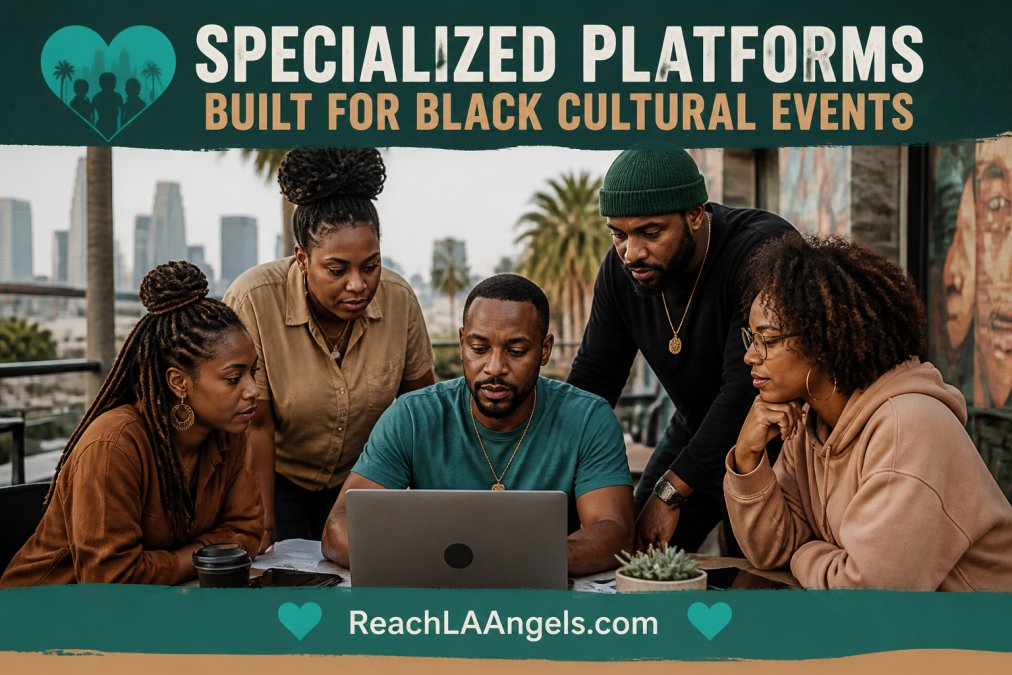
Reach LA Angels: Community-First Event Discovery
Reach LA Angels operates on a fundamentally different model than mainstream ticketing platforms. This is a community-first event discovery platform built specifically to celebrate and elevate Black and Brown cultural events in Los Angeles.
What makes it different: Reach LA Angels curates rather than just lists. The team actively works with organizers, creators, and producers to ensure events are positioned authentically and discovered by people who genuinely value cultural experiences. You’re not competing in a sea of generic listings, you’re featured in a space where cultural authenticity is the standard, not the exception.
The platform bridges creators and audiences in ways that matter. When you post your event on Reach LA Angels, you’re reaching people actively seeking Black cultural experiences. Your event gets visibility with the right crowd. The platform’s emphasis on uplifting Black and Brown communities means the entire discovery experience is built around cultural specificity. No algorithm confusion. No cultural misrepresentation. Just direct connection between organizers and engaged audiences.
For organizers, this means real community engagement, increased visibility for your talent, and the ability to build recurring audiences who return because they trust the platform’s curation. You’re not just selling tickets, you’re building a movement. If you need additional support amplifying your reach beyond the platform itself, Event Promotion Services can help extend your visibility to the right audiences.
Eventnoire: Ticketing Designed for Black Audiences
The trade-off: Eventnoire is transaction-based, meaning fees apply per ticket sold. For high-volume events, this can add up. But for organizers prioritizing audience quality and community authenticity over maximum ticket volume, the investment makes sense.
Posh: Mobile-First Social Events
The limitation: Posh is built for social experiences, not large-scale cultural festivals or symposiums. If your event is a massive community celebration, Posh might not be the right fit. But for smaller, recurring cultural gatherings with strong social components, it delivers.
Ticket Tailor: Cost-Effective Ticketing Control
Best for organizers who prioritize profit margins and already have strong promotional channels.
Best Practices for Cultural Event Promotion
Getting your event listed on the right platform is half the battle. The other half is reaching people authentically, and that means understanding what actually moves Black cultural audiences.
Start with clarity about your audience. Not “everyone interested in culture.” Be specific. Are you targeting long-time community members, younger generations discovering their heritage, professionals looking for authentic social experiences, or a mix? Your audience definition shapes everything else, your messaging, your partnerships, your pricing, even your event timing.
Build community before the event. Use social media, email, and word-of-mouth to create anticipation. Don’t just announce the event; tell the story behind it. Why does this event matter? What makes it different? People show up for meaning, not logistics. For Black cultural events especially, authenticity is non-negotiable. If your event feels like it’s being marketed to people rather than with people, your audience will feel it.
Use authentic partnerships. Connect with community organizations, local businesses, cultural centers, and influencers who already have trust within your target audience. Real partnerships amplify reach in ways paid advertising never can. A single recommendation from a trusted community voice outweighs a hundred generic social media posts. Think about who your audience already follows, who they already trust, and build relationships there.
Address accessibility from the start. This isn’t an afterthought. If your event has a physical location, confirm wheelchair access, accessible parking, and accessible restrooms before you promote. If you’re offering virtual or hybrid components, use closed captioning and provide ASL interpretation for live programming. For ticketing, offer accessible pricing options, sliding scale, community discounts, or free tickets for caregivers. Document all of this on your event page. Accessibility isn’t charity; it’s community care, and it signals that your event was built with intention.
Be transparent about what people are paying for. Price your tickets fairly and explain what the experience includes. Hidden fees and surprise costs destroy trust. Cultural audiences especially value authenticity; that extends to pricing and transparency. If you’re charging admission, be clear about why. Is it covering artist fees? Venue rental? Production costs? People respect transparency.
Plan for community sensitivities. If your event touches on cultural history, social justice, or identity, think through potential sensitivities in advance. Have you consulted with community members about the framing? Are you centering the right voices? Are you avoiding stereotypes or appropriation? These conversations happen before you launch, not after someone calls you out. It’s not about being perfect; it’s about being intentional.
Follow up after the event. Collect feedback, thank attendees, and build your mailing list. Ask specific questions: What resonated? What could improve? What would bring you back? The real value isn’t a single event; it’s the community you build over time. People who feel heard come back.
Event Marketing Tools for Community Organizers
Beyond the ticketing platform itself, you need tools that help you reach, engage, and measure impact.
Email marketing platforms let you build direct relationships with attendees. Platforms like Klaviyo and Mailchimp offer affordable ways to send event announcements, reminders, and follow-ups. For community organizers, email is often more reliable than social media algorithms. Build your list from day one, every attendee is a potential repeat attendee if you stay connected.
Social media management tools help you maintain consistent presence across platforms without burning out. Tools like Buffer or Later let you schedule posts, track engagement, and manage multiple accounts efficiently. For cultural events, consistent, authentic social presence builds trust. Don’t chase every platform; focus on where your audience actually spends time.
Analytics and impact measurement tools are where most organizers fall short. You need to track more than ticket sales. Use analytics to see where your traffic comes from and which messaging resonates. But also measure cultural impact: How many first-time attendees came? How many people connected with each other? Did attendees report feeling more connected to community? Did they discover new artists or creators? Did they bring friends to future events? These metrics matter more than raw attendance numbers when you’re building cultural movements.
Create a simple post-event survey asking: What was the highlight? Would you attend again? Who did you meet? What would make this better? These responses tell you whether you’re actually building community or just moving tickets. Track them over time. You’ll see patterns that guide your next event.
Community platforms like Discord or Mighty Networks let you build spaces where attendees connect before and after events.
How to Choose the Right Platform for Your Event
The right platform depends on three things: your event type, your audience size, and your revenue priorities.
Frequently Asked Questions
What makes a platform good for Black cultural events?
The best platforms for Black cultural events prioritize community-driven discovery, cultural authenticity, and built-in audience reach within communities that value those events. Look for platforms with curated listings, culturally-aware marketing tools, and organizer support that understands the specific needs of Black-led events. Platforms like Reach LA Angels are purpose-built with these values, unlike generic ticketing sites that treat all events the same.
How can event marketing tools for community organizers help grow attendance?
Specialized event marketing tools offer targeted reach to audiences actively seeking cultural events, integrated email campaigns, social media promotion features, and analytics that show you exactly who’s engaging with your event. Community-focused platforms connect you directly with people who value authentic cultural experiences, meaning higher conversion rates and more qualified attendees than broad platforms.
Why should I avoid generic platforms like Eventbrite for niche cultural events?
Generic platforms lack the cultural context and targeted audience discovery that niche events need. Your Black cultural event gets lost among thousands of unrelated listings. Specialized platforms filter audiences by interest and values, meaning people finding your event are already predisposed to attend. You also get support from organizers who understand cultural event logistics, community engagement, and authenticity.
What’s the difference between transaction-based and subscription pricing for event platforms?
Transaction-based platforms charge a percentage or flat fee per ticket sold, so you only pay when revenue comes in. Subscription platforms charge a monthly fee regardless of sales volume. For small or recurring cultural events, transaction-based models often make more sense. For high-volume events, subscriptions may cost less overall. Compare your expected ticket sales against each model’s fees before committing.