
Increase Visibility for Multicultural Events: 7 Proven Strategies
Table of Contents
- Why Visibility Matters for Multicultural Neighborhood Events
- Community Event Promotion Strategies That Actually Work
- How to Partner With Local Businesses for Events
- Event Outreach Templates for Community Leaders
- Culturally Responsive Event Marketing Approach
- Measure What Matters: Tracking Real Engagement
- Common Visibility Mistakes to Avoid
- Frequently Asked Questions
Last Updated: September 30, 2026
Why Visibility Matters for Multicultural Neighborhood Events
Getting eyes on your event is half the battle. The other half is getting the right eyes, people who actually show up, engage, and come back for more.
At Reach LA Angels, we’ve seen community events struggle not because the programming wasn’t solid, but because nobody knew they existed. That’s a visibility problem, not a quality problem.
Multicultural neighborhood events are rooted in real community and honor heritage. They’re not chasing viral moments, they’re building connection. But authenticity only matters if people find it. When you increase visibility multicultural events, you’re amplifying voices that deserve to be heard and creating space for people to see themselves reflected in their city.
What works is strategy built on cultural intelligence, authentic messaging, and knowing where your actual audience lives, both online and offline.
Community Event Promotion Strategies That Actually Work
Build Your Audience Before the Event Launches
Start two months out, not a week before. Most organizers treat promotion like a sprint at the finish line. What works is building momentum from the beginning.
Here’s the real approach:
- Identify your core community first. Know who your event is for. Which neighborhoods? Which cultural groups? Which networks already trust you?
- Create a waiting list or early interest group. Use email, a form, or a social media group to get people invested before the event is finalized.
- Share behind-the-scenes content early. Show planning, introduce performers, let people feel part of the creation.
- Build partnerships before launch. Reach out to complementary businesses, community organizations, and local leaders so they promote alongside you.
Use Culturally Relevant Messaging
This is where most campaigns fall apart.
Generic messaging: “Join us for a celebration of culture.” Culturally relevant messaging: “We’re bringing back the sounds of ’90s Freestyle, the soundtrack that defined our community. Featuring live performances from artists who shaped the scene.” One has specificity. One has respect.
Here’s what culturally relevant messaging requires:
- Know the details of what you’re celebrating. Deep knowledge, not surface-level. Understand history, significance, and specific traditions.
- Use language your community actually uses. Avoid corporate-speak and forced trendiness. Authentic beats polished every time.
- Center the community’s voice, not the event’s. Messaging should be about what the community gains and celebrates.
- Avoid tokenism. Don’t reduce a culture to a stereotype or use performative imagery. Center the actual community.
Test your messaging with people from that community. Ask: Does this feel authentic? If they hesitate, rewrite it.
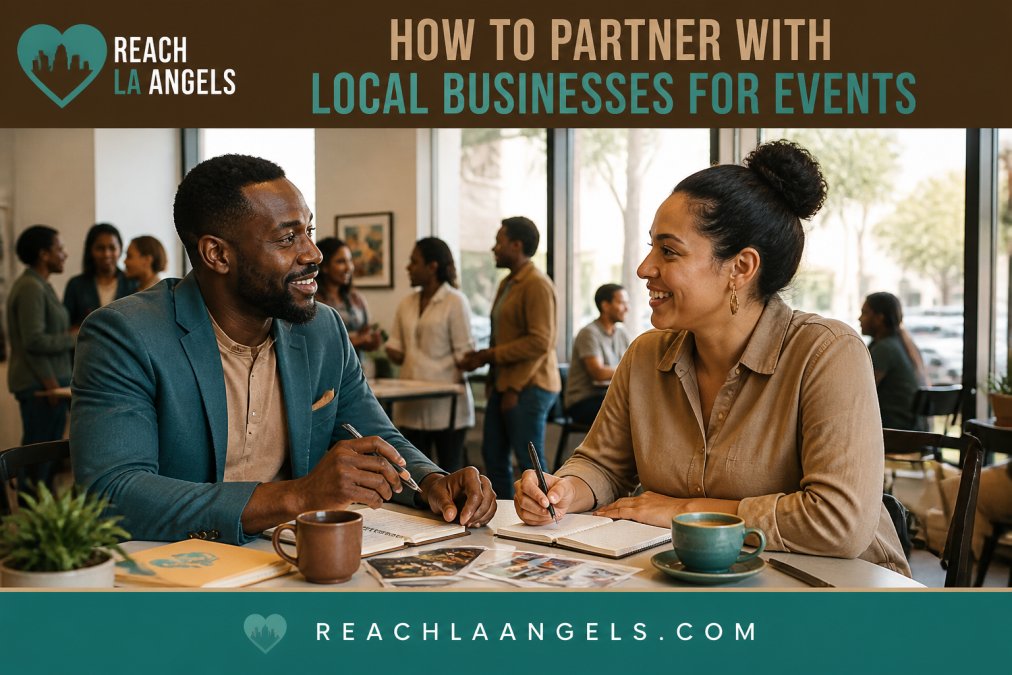
How to Partner With Local Businesses for Events
Identify the Right Partners
The right partner shares your values and already serves your community. They’re looking to add value, not extract it. Strong partnerships feel like collaboration, not transactions.
Start here:
- Map businesses in your community. Who already has relationships with the people you’re reaching? Barbershops, restaurants, bookstores, community centers, places where your community gathers.
- Look for a track record of community involvement. Have they sponsored events? Do they hire from the community? These signal genuine investment.
- Consider complementary services. A restaurant for a cultural festival, a boutique or gallery for a music event.
- Check their social media and messaging. Do they use authentic language or feel performative? You want partners who get it.
A small business owner deeply rooted in the community is worth more than a chain looking for good PR.
Make the Ask Clear and Mutual
Be specific about what you need and what you’re offering. Vague asks don’t work. They don’t know what you want or what they’re getting.
Here’s what a clear ask looks like:
- State exactly what you need. Be specific: sound equipment, venue for 150 people, vendor booth.
- Show what they get in return. Logo placement, social media mentions, vendor booth space, direct audience access.
- Explain why they’re the right fit. Show you did your homework.
- Give them time to decide. At least a week. Respect a no.
Have a simple one-pager with dates, audience size, what you need, and what they get. Professionalism builds trust.
Event Outreach Templates for Community Leaders
Email Outreach That Gets Response
Subject lines matter. Generic: “Event Sponsorship Opportunity.” Better: “Partner With Us to Celebrate [Community] Culture This Fall.”
The body should be short, respectful, and clear:
Hi [Name],
Here’s what we’re looking for: [specific ask].
In return, you’d get: [specific benefits].
Thanks for considering this. We’d love to work together.
[Your name and contact info]
Social Media Messaging Frameworks
Different platforms, different approach. Be specific, authentic, and clear.
Instagram: Lead with specificity. Include date, time, location, why it matters, one unique detail, and clear CTA.
LinkedIn: Speak to business value and community impact together.
Email Newsletter: Give insider info, early access, specific details.
Culturally Responsive Event Marketing Approach
Research Your Audience’s Cultural Background
You can’t market authentically without understanding what you’re celebrating.
This isn’t about stereotypes or surface-level knowledge. It’s about depth. It’s about understanding the history, the significance, the specific traditions that matter to your community.
Here’s how to do the research:
- Talk to people in the community directly. Ask questions. Listen more than you talk. What matters to them? What traditions do they want to see honored? What are they tired of seeing done wrong?
- Read the history. Not Wikipedia summaries, actual books, essays, documentaries made by people from that community. Understand the context.
- Follow community leaders and creators. See how they talk about their culture. What language do they use? What values do they emphasize? What do they push back against?
- Understand the specific traditions of your event. If you’re hosting a Lunar New Year celebration, understand what that means to different communities. If it’s a Juneteenth event, know the history and the significance. If it’s a Día de Muertos celebration, understand the spiritual and cultural importance.
- Know the current conversations. What’s happening in this community right now? What issues matter? What are they celebrating? What are they fighting for? Your event exists in context.
Avoid Tokenism in Your Messaging
Tokenism feels like this: centering white comfort, reducing a culture to a stereotype, making it about the event instead of the community, using imagery that feels performative.
Here’s what to watch for:
- Don’t use a culture as a backdrop for your event. The culture isn’t decoration. It’s the heart of what you’re doing.
- Don’t reduce it to a single stereotype. A culture is complex. Show that complexity. Show different voices, different perspectives, different traditions.
- Don’t center outside approval. You’re not doing this for white people to feel good about themselves. You’re doing this for the community to see themselves, celebrate themselves, connect with themselves.
- Don’t make it about how progressive or “woke” you are. This isn’t about you. It’s about the community.
- Don’t use imagery that feels staged or inauthentic. Use real photos of real people. Avoid stock photos that feel generic or stereotypical.
Measure What Matters: Tracking Real Engagement
Numbers tell a story, but you have to measure the right things.
Track these instead:
- Community attendance vs. outside attendance. How many people came from the community you’re serving? That’s the real metric. A hundred people from outside the community is less valuable than fifty people from inside it.
- Return attendees. How many people came to your last event and came to this one? Loyalty matters more than one-time attendance.
- Community partnerships. How many local businesses are involved? Are they the same ones or new ones? Are they deepening their involvement?
- Social engagement from the community. Not just likes. Are people in the community sharing your content? Tagging friends? Having conversations? That’s real engagement.
- Feedback from the community. What did people say? Did they feel seen? Did they feel like the event honored their culture? This matters more than a survey.
- Media and visibility. Did local media cover it? Did community leaders talk about it? Did it get shared beyond your immediate network?
Common Visibility Mistakes to Avoid
Starting promotion too late. One week out is not enough time. You need at least eight weeks to build real momentum.
Frequently Asked Questions
How do you increase visibility for multicultural neighborhood events on a limited budget?
Start with what’s free: organic social media, community email lists, and local partnerships. Partner with neighborhood organizations, churches, and small businesses who’ll promote your event to their audiences at no cost. Use word-of-mouth strategically by asking early attendees to invite friends. Focus your paid spend on the channels where your specific audience actually spends time, often neighborhood Facebook groups or Instagram, not broad platforms. Quality promotion to the right 500 people beats generic promotion to 5,000 strangers.
What’s the best way to reach diverse audiences for local events without sounding inauthentic?
Research your audience’s actual cultural background and traditions before you write a single promotional message. Talk to community leaders, attend similar events, read local news. Then speak directly to what matters to them, not what you think they want to hear. Avoid generic ‘celebrate diversity’ language. Instead, highlight specific cultural elements, local artists, or community leaders involved. Authenticity comes from knowing your audience deeply enough to speak to their real interests, not from trying to sound cool.
How do I know if my event marketing is actually culturally responsive?
Ask yourself: Did I research this community before promoting? Am I centering their voices and stories, or just using their culture as a backdrop? Are local artists, creators, and community members featured prominently, not just mentioned? Are you avoiding stereotypes and tokenism? Run your messaging by actual community members before launch. If they say it feels authentic and respectful, you’re on track. If they spot issues, listen and adjust. Real cultural intelligence comes from dialogue, not guessing.
What metrics should I track to measure event visibility and engagement?
Track attendance from each promotional channel so you know what actually works. Monitor social media engagement, shares, comments, and saves matter more than likes. Count inquiries and RSVPs. Most importantly, ask attendees how they heard about your event. This tells you which partnerships and channels are delivering real people, not just impressions. After the event, follow up with attendees to see if they felt the promotion matched the actual experience. Repeat what works, cut what doesn’t.