
Connecting With Local Black and Brown LA Communities
Table of Contents
- Why Connecting With Local Black and Brown Communities Matters
- Finding Community-Driven Events Los Angeles
- How to Support Local Minority-Owned Businesses
- Building Authentic Networking in Los Angeles
- Approaching Community Engagement Without Performativity
- Creating Lasting Relationships With Community Organizers
- Next Steps: Your Role in Strengthening Community Bonds
- Frequently Asked Questions
Last Updated: September 20, 2026
Why Connecting With Local Black and Brown Communities Matters
Connecting with local Black and Brown LA communities isn’t performative work. It’s foundational. These communities shape the city’s cultural identity, drive innovation, and create the experiences that make LA distinct. When you show up authentically, you’re not extracting value, you’re building reciprocal relationships.
At Reach LA Angels, we understand the difference between surface-level participation and genuine connection. Real connection requires presence, respect, and willingness to listen more than you talk.
The stakes matter here. Local creators, organizers, and small business owners in these communities often lack visibility despite producing world-class events and services. When you connect meaningfully, you amplify their reach. You strengthen the social capital that holds neighborhoods together. You help keep LA’s cultural heartbeat alive.
Start by asking yourself why you want to connect. “Because it’s trendy” or “to look good on social media” will be felt immediately. Genuine curiosity about people, their work, and their communities opens doors that performative interest never will.
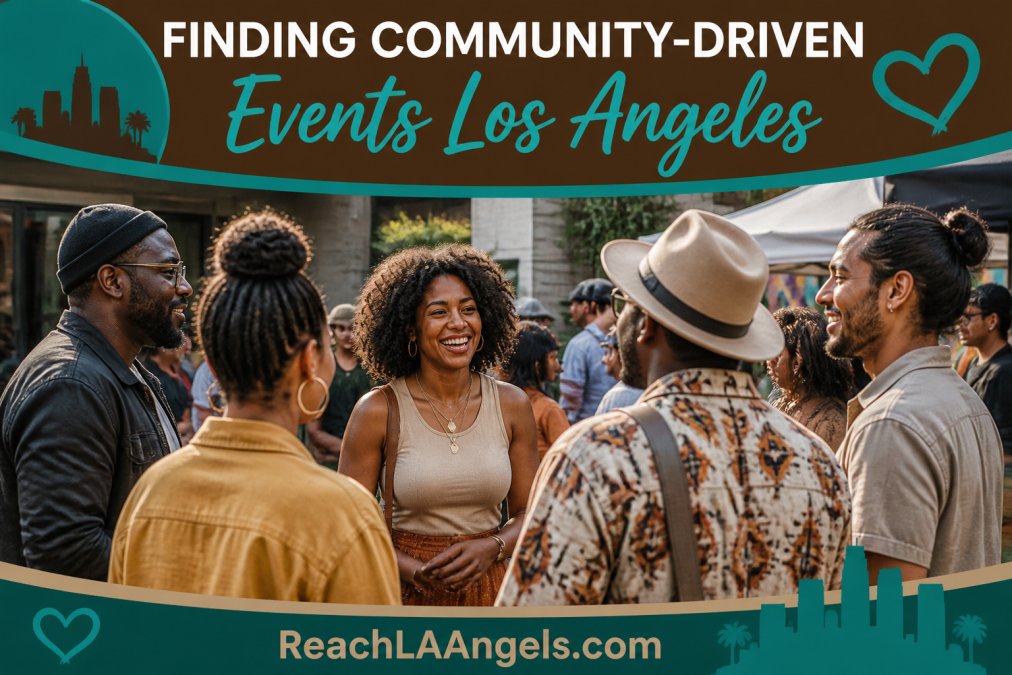
Finding Community-Driven Events Los Angeles
Community-driven events Los Angeles are happening every week across the city. The challenge isn’t finding them, it’s knowing where to look, how to evaluate what’s real, and how to move past the algorithm-driven noise that drowns out grassroots work.
Start with grassroots platforms dedicated to lifting up local creators. Reach LA Angels curates events specifically centered on Black and Brown communities, filtering out commercialized versions that strip away cultural meaning. You’ll find everything from intimate listening sessions to large-scale celebrations, all vetted for authenticity.
Beyond curated platforms, build your own discovery system. Follow neighborhood-based collectives directly on Instagram and TikTok, not the polished brand accounts, but the organizers posting stories from setup to breakdown. Join community Discord servers, Slack groups, and group chats where events are discussed before they hit mainstream platforms. Word-of-mouth still moves faster than algorithms in tight-knit communities. Ask people you know who already participate. A personal recommendation carries weight that no algorithm can match. You’ll learn not just where the event is, but what to expect, who’s running it, and why it matters.
Check local community centers, libraries, and cultural institutions. Many host or promote events that never get heavy social media promotion. The Los Angeles Public Library system, for example, hosts community events across branches (Events). Community centers in South LA, East LA, and other cultural hubs often have event calendars that reflect neighborhood priorities, not corporate sponsorship.
Look at neighborhood-specific newsletters and community boards. Nextdoor, community Facebook groups organized by zip code or neighborhood, and email lists maintained by local nonprofits often surface events before they’re widely promoted. These channels tend to reflect what residents actually care about, not what algorithms think will drive engagement.
What to look for in authentic events:
- The organizer is from the community, not extracting from it
- Ticket prices are accessible, not inflated to maximize profit
- The space feels intentional, a community center, gallery, park, or venue with roots in the neighborhood, not a random commercial space rented for the night
- Community members are visibly involved in planning and execution, not just attending
- The event has a clear purpose beyond profit: cultural preservation, skill-sharing, celebration, organizing, or community building
- The organizer has a track record, they’ve run multiple events, not just one viral moment
- There’s transparency about who benefits financially, if anyone
Red flags that signal extraction over community care:
- Heavy promotion on mainstream platforms with minimal community roots
- Organizers who are new to the community or have no visible connection to it
- Events that center non-community members or outside brands
- Vague mission statements or unclear who’s actually running the event
- Pricing that doesn’t align with neighborhood income levels
- No visible community member involvement in decision-making
Once you find an event, show up early. Talk to the organizer. Ask how they got started, what they’re trying to build, what they need. Real organizers appreciate genuine curiosity. They’ll tell you about other events, other organizers, other spaces. That’s how you build a real map of what’s happening.
How to Support Local Minority-Owned Businesses
Supporting local minority-owned businesses is direct action. Your money goes to people building wealth in their own communities, not extracting it. But real support goes beyond transactions.
The transaction layer: where and how to spend
Start by shifting where you spend. Coffee, food, services, events, identify Black and Brown-owned options first. Make that your default, not your occasional choice. One transaction matters less than a pattern of loyalty.
Go beyond transactions. Leave honest reviews on Google Maps and Yelp. Tag the business in social posts. Bring friends. Refer them to others. Word-of-mouth is free marketing that helps small businesses compete against larger operations with bigger ad budgets.
Attend their events. Buy their products. Hire their services. Show up consistently, not just during heritage months when performative support spikes.
Finding minority-owned businesses:
- Search “Black-owned” or “Latinx-owned” plus your service type on Google Maps
- Check community directories maintained by local organizations
- Follow local business collectives on social media
- Ask community members directly, they know who’s doing good work
- Use platforms that specifically highlight minority-owned businesses
The structural layer: connecting businesses to resources and growth
Beyond your wallet, minority-owned businesses need access to what larger companies take for granted: capital, mentorship, networks, and visibility.
If you work in finance, marketing, legal services, or operations, offer your expertise. Many minority-owned businesses operate lean, they can’t afford consultants. A few hours of pro bono help with bookkeeping, social media strategy, or contract review can unlock months of growth. Ask directly: “What’s the biggest operational challenge you’re facing right now?” Then offer what you can actually do.
Connect businesses to funding and support programs. Organizations like the Small Business Administration (SBA) offer resources specifically for minority-owned enterprises, including loan programs and technical assistance (Grow your business). The Community Development Financial Institutions (CDFI) Fund supports lenders that serve underserved communities (CDFI Program).
How to avoid the “diversity token” trap:
Avoid the savior narrative. You’re not “helping” a minority-owned business by supporting it. You’re making a smart choice. These creators bring authenticity, cultural knowledge, and community roots that generic chains cannot replicate. You benefit from that. It’s mutual.
Building Authentic Networking in Los Angeles
Authentic networking in Los Angeles means showing up as yourself, not as a brand. It means listening more than pitching. It means building relationships before asking for anything.
How to build real relationships:
- Attend the same events multiple times
- Introduce people to each other
- Support others’ work before asking for support
- Follow up after events with genuine messages
- Show up for community members’ projects and celebrations
- Be honest about what you can and can’t do
Approaching Community Engagement Without Performativity
Performative engagement is toxic. It extracts value, creates resentment, and damages trust. Real communities can spot it from a distance.
Ask yourself these questions before you engage:
- Am I here because I genuinely care, or because it looks good?
- Am I listening to what this community needs, or imposing what I think they need?
- Will I still be here in six months?
- Am I centered in this space, or are community members?
- What am I taking, and what am I giving?
If you can’t answer those honestly, reconsider your approach.
Performativity dies when you stop thinking about how you look and start thinking about impact. Focus on relationships, not optics. The people will notice.
Creating Lasting Relationships With Community Organizers
Community organizers are the backbone of cultural vitality in LA. They’re often working without funding, recognition, or support. Building real relationships with them requires respect and consistency.
How to build relationships with organizers:
- Attend their events consistently
- Engage with their work on social media
- Offer specific, concrete help
- Introduce them to people who might support their work
- Ask them to collaborate on projects
- Respect their time and energy
- Show up when they’re celebrating wins and weathering challenges
Next Steps: Your Role in Strengthening Community Bonds
Connecting with local Black and Brown LA communities is a choice you make repeatedly. Not once. Repeatedly. It’s a practice, not a destination.
Frequently Asked Questions
How can I find authentic cultural events in Los Angeles without ending up at touristy commercialized experiences?
Start by looking for community-driven events Los Angeles that are organized by local creators and grassroots organizations rather than large corporate promoters. Reach LA Angels curates events specifically from community organizers who are rooted in their neighborhoods. Check event descriptions for who’s organizing, if it’s a neighborhood group, cultural institution, or individual creator you recognize, that’s usually authentic. Ask in local community groups and follow organizers on social media to see what they’re promoting directly.
What’s the best way to support local minority-owned businesses while connecting with Black and Brown communities?
Show up consistently. Attend their events, buy from their vendors, and tell others about them. When you support local minority-owned businesses, you’re not just spending money, you’re building economic growth in neighborhoods that need it. Ask business owners directly how you can help: maybe they need volunteers, social media shares, or word-of-mouth promotion. Real support means showing up repeatedly, not just once.
How do I approach community engagement without being performative or extractive?
Listen first. Go to events to learn, not to perform your allyship. Ask community organizers what they actually need instead of assuming. Show up consistently over time, real relationships aren’t built in one visit. Support the community’s priorities, not your own agenda. If you’re not from the community, understand your role: you’re a guest and a supporter, not the center of the story. Authenticity means showing respect for the culture and the people who’ve built it.
How can I build lasting relationships with local community organizers?
Start by attending their events regularly and introducing yourself genuinely. Follow up afterward, send a message thanking them for the experience. Offer help without expecting anything in return: volunteer, promote their events, connect them with resources. Community organizers remember people who show up consistently and respectfully. Relationships take time. Be patient, be reliable, and let trust develop naturally through repeated positive interactions.
LA’s strength has always been its people and the connections between them. When you engage authentically with Black and Brown communities, you’re not just attending events, you’re helping sustain the cultural foundation that makes this city distinctive. Reach LA Angels connects you with organizers, creators, and communities ready to build together. Post Your Event and join a movement that keeps LA rooted in its real culture.