
Marketing Multicultural Events: A Local Audience Playbook
Last Updated: November 5, 2026
Quick Summary
Marketing multicultural events to local audiences means researching the community before you plan, then promoting through the channels and trusted messengers that audience already uses. Map the neighborhood, talk to three or four local anchors, and confirm your date against cultural observances. When people see themselves in the campaign, they show up.
- Pull census tract data for languages spoken at home, households with children, and median age.
- Identify three or four trusted local organizations and hold three or four conversations with them.
- Start your social promotion plan four to six weeks out and shift to logistics two weeks before.
- Capture each attendee’s source with a distinct link, code, or landing page per channel.
- Follow up within a few days and ask one short question: what would make you come back?
Table of Contents
- Why Local Audiences Show Up for Multicultural Events
- Start With Community Research, Not a Guess
- How to Promote Community Events on Social Media
- Build an Event Promotion Social Media Plan That Fits the Culture
- Multicultural Marketing Examples That Actually Land
- Community Partnerships for Event Promotion
- Measure What Matters and Follow Up After the Event
- Post Your Event Where the Community Is Already Looking
- Frequently Asked Questions
Why Local Audiences Show Up for Multicultural Events
Marketing multicultural events to local audiences starts with one truth: people show up when they feel seen, not sold to. The events that fill up aren’t the loudest. They’re the ones rooted in real community life.
Multicultural marketing is the practice of reaching audiences through their own culture, language, values, traditions, and trusted messengers, rather than translating a general campaign into a different skin.
Here’s what most guides get wrong: they treat diverse audiences as a single block. They’re not. A family looking for a cultural festival and a young professional hunting for a Saturday night out have different media habits, different schedules, and different reasons to leave the house. Marketing multicultural events to local audiences means respecting those differences.
Below, we’ll walk through the full playbook: research, social promotion, partnerships, and follow-up that keeps people coming back.
Start With Community Research, Not a Guess
The biggest mistake in cultural marketing is assuming you already know the audience. You don’t. Not until you’ve done the work.
Community research means listening before you plan. But listening isn’t a vibe, it’s a process. Here’s the approach to run before committing to an event or a message.
Map the neighborhood first. Pull the census tract data for the area you’re targeting and look at three things: the dominant languages spoken at home, the share of households with children, and the median age. Those three numbers tell you whether you’re planning a family afternoon, a grown-folks evening, or something that has to serve both.
Then find the anchors. Every community has three or four organizations that already have the audience’s ear, a faith institution, a cultural association, a small business association, a school parent group, a neighborhood council. These are your research subjects and later your partners. A common approach is to start with three or four conversations with the people who serve that audience daily. Ask what they care about, where they get their news, and what past events they actually enjoyed, and what went wrong at the ones that didn’t.
Audit the media habits honestly. Don’t assume. Ask each anchor which channels actually reach their people: a specific Instagram account, a local radio show, a WhatsApp or group chat, a community newsletter, a church bulletin, a barbershop or salon with a following. Some segments live on Instagram.
Check the calendar against the culture. Before you pick a date, confirm it doesn’t collide with a major observance, a religious holiday, or a competing community event. A great campaign on the wrong weekend is a wasted campaign.
Watch out: skipping this step and copying another city’s campaign is the fastest way to look like an outsider. Cultural context doesn’t transfer. It has to be earned locally, and the anchors in that neighborhood will know within one post whether you did the work or borrowed it.
Here’s the research checklist to run before you commit to a date or a message.
| Research step | What to do | What it tells you |
|---|---|---|
| Map the neighborhood | Pull census tract data for the target area | Languages at home, households with children, median age |
| Find the anchors | Identify three or four trusted local organizations | Who already has the audience’s ear |
| Talk to anchors | Hold three or four conversations with them | What they care about, where they get news |
| Audit media habits | Ask each anchor which channels reach their people | Instagram, local radio, group chats, newsletters |
| Check the calendar | Confirm the date against cultural observances | Avoid collisions with holidays and competing events |
How to Promote Community Events on Social Media
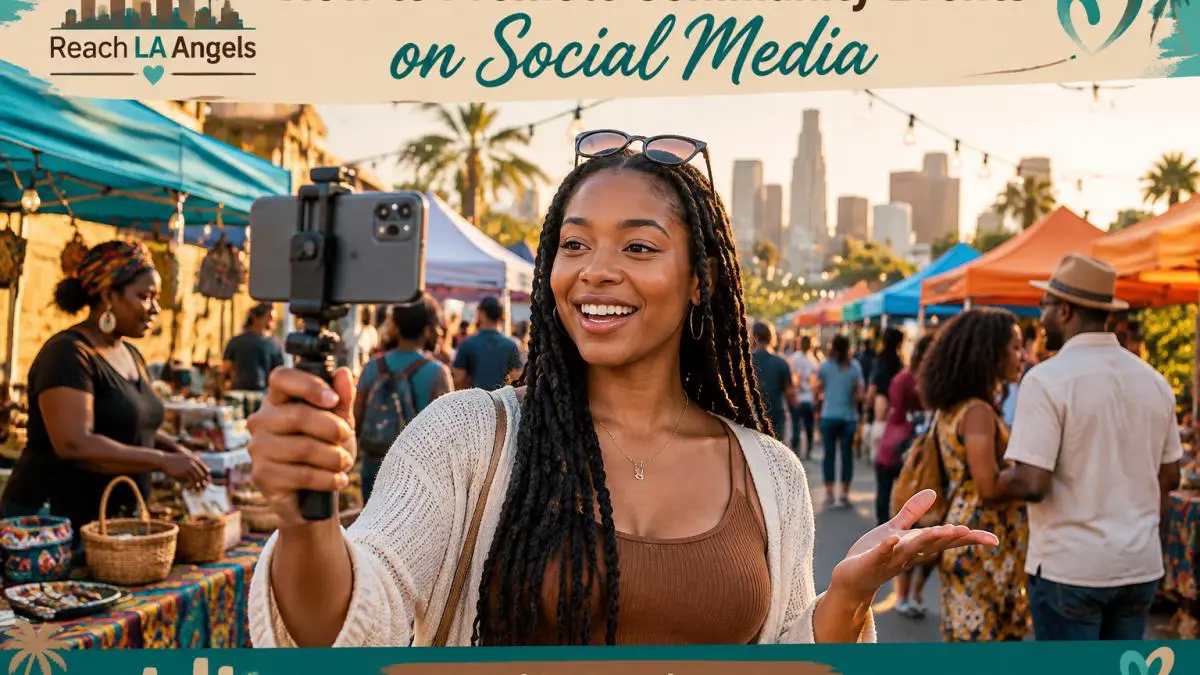
Social media is where discovery happens, but only if you show up with cultural relevance, not a generic flyer. Here’s how to promote community events on social media without sounding like everyone else.
- Lead with people, not the poster. Short clips of past attendees, performers, and vendors outperform polished graphics.
- Write in the community’s voice. Match the tone people actually use. Forced slang reads as fake.
- Name the cultural context. Say what the event honors and why it matters, in plain language.
- Use the platforms your audience already trusts. Don’t spread thin across every app.
- Post consistently in the two weeks before the date. Momentum builds attendance.
If you want a broader rundown of tactics before drilling into the culture-specific plan, our team put together the best ways to promote community events in one place.
The woman is American.
Build an Event Promotion Social Media Plan That Fits the Culture
A strong event promotion social media plan is built backward from the date, not forward from a brainstorm. Set your milestones, then fill each one with culturally relevant messaging and creative.
Start four to six weeks out. Tease the experience. Two weeks out, shift to logistics and social proof. The final week is pure urgency: reminders, lineups, and last-call posts.
Representation matters here. Show real faces from the community in your creative. Authenticity reads instantly, and audiences can tell when a campaign was made about them rather than with them.
For concrete social ad tactics that fill seats once your cultural angle is set, see our guide on social media advertising tips for events.
Multicultural Marketing Examples That Actually Land
Campaigns that land tend to treat culture as the main event, not decoration.
Think about a neighborhood heritage celebration that partners with local food vendors and lets the vendors tell their own stories in the promotion. The audience hears a familiar voice and shows up. Or a nightlife series that books local DJs rooted in the community’s sound and promotes through the same channels those fans already follow.
The lesson across multicultural marketing examples is consistent. When the community sees itself in the campaign, engagement follows. When it sees a brand borrowing the culture without credit, it scrolls past.
To see this in action, explore the best multicultural events in LA and study how the strongest ones present themselves.
Community Partnerships for Event Promotion
Community partnerships for event promotion do more than expand reach. They transfer trust.
When a respected local organization co-signs your event, their audience gives you a hearing they’d never give an ad. Build those relationships early, not the week of. Offer partners real value: visibility, a shared stage, a cut of the spotlight.
Everyone is American.
Treat partners as bridges rather than billboards, and nurture them year-round.
Measure What Matters and Follow Up After the Event
Attendance is the headline number, but it’s not the whole story. The events that build a real audience are the ones where the organizer knows exactly what happened and what to do next.
Set the measurement plan before you promote. Pick three or four numbers and commit to them up front: tickets or RSVPs, actual check-ins, which channel each attendee came from, and how many are first-timers versus repeat. Add one relationship metric, new partner contacts or new community organizations engaged. Relationship metrics are easy to forget, and they compound.
Capture the source at the point of signup. Use a distinct link, code, or landing page per channel so you can see what actually drove people.
Ask for consent, not just contact info. Collect emails or numbers with a clear opt-in at registration and at check-in. Follow-up without consent burns trust in a community that remembers.
Follow up while the energy is still warm. Thank attendees within a few days, share photos, and ask one short question: what would make you come back?
Close the loop with your partners. Send each community partner a short recap: attendance, what their audience brought, and what you’ll do differently next time. Partners who see results tend to stay engaged.
Turn one event into a calendar. The real win is repeat visits and year-round participation, not a single night.
For a clear method to calculate return on investment, use how to measure ROI for community event promotion.
Post Your Event Where the Community Is Already Looking
You can build an audience one post at a time, or you can meet people where they’re already searching. That’s the difference between shouting into the feed and getting discovered.
At Reach LA Angels, we built a platform for exactly this. We spotlight community-driven events with a special emphasis on uplifting Black and Brown communities, so local creators, planners, and organizers gain visibility with audiences who value authentic cultural experiences. Our curated listings simplify discovery of diverse neighborhood events and connect you to the city’s cultural heartbeat.
If you want to reach LA’s multicultural audience through an established local channel instead of starting cold, advertise with Reach LA Angels. And when you’re ready to get your event in front of people who’ll actually show up, post your event and let the community find you.
Frequently Asked Questions
How do you promote a multicultural event to local audiences?
Start with research, not a flyer. Find out which neighborhoods, community organizations, and media outlets already serve the audience you want. Then build a promotion timeline that runs several weeks out: social posts, partner shares, local media outreach, and a reminder push in the final days. Keep messaging in the community’s own language and references. Multicultural events succeed when the audience sees themselves in the promotion, not just in the invite list.
What are some multicultural marketing examples that work for events?
Strong examples share one trait: the culture is central, not decorative. A heritage-month block party promoted through neighborhood churches, barbershops, and local radio. A food festival that lets vendors tell their own stories in the creative. A night market that partners with cultural associations for outreach. The common thread is community partnerships and messaging built with the audience, not handed to them. Authenticity shows in who is speaking, not just what the flyer says.
Which social platforms work best for promoting community events?
It depends on where your audience already spends time. Instagram and TikTok carry short video and event reels well. Facebook groups remain strong for neighborhood and family-oriented events. For many Black and Brown communities, group chats and word of mouth still drive attendance more than any ad. Use an event promotion social media plan that puts video first, then backs it with partner shares and direct messages to community leaders.
How can event organizers build trust with diverse communities?
Show up before you sell. Attend other community events, credit the partners who helped you, and keep your promises on timing and access. Cultural sensitivity means asking rather than assuming: let community voices shape the program and the messaging. Trust compounds when people see the same faces and organizations involved year after year. One well-run event with real community partners does more for your reputation than a dozen paid ads.
How do you measure the success of a multicultural event campaign?
Track attendance against your target, but also watch engagement rate, shares from community partners, and how many attendees return for your next event. Ask a simple post-event question about how people heard about you. Customer loyalty and community trust are slower signals, but they predict whether your next multicultural event lands. Return on investment matters, yet a campaign that grows local networks can pay off long after the event ends.
Marketing multicultural events to local audiences takes patience, cultural sensitivity, and a real relationship with the people you’re inviting. Reach LA Angels makes that easier with curated event listings, a platform built to elevate local talent, and a direct bridge to audiences who show up for authentic cultural experiences. Get started with Reach LA Angels and put your event in front of the community already looking for it.
