
Best Ways to Promote Community Events in 2026?
Last Updated: October 30, 2026
Quick Summary
The best way to promote community events is to start with a clear picture of your audience, then use free listings, targeted social media, a week-by-week timeline, and simple flyers. Work backward from event day and measure which channels bring people through the door. Plan the sequence before spending anything.
- Name the specific people your event is for before writing any promotion.
- Use free community calendars and neighborhood groups as your base layer.
- Tailor content for each social platform instead of copying one post everywhere.
- Start promotion about eight weeks out, with registration tested before going public.
- Track registrations versus actual attendance to see which channels truly work.
Table of Contents
- How to Promote Community Events in 2026 Starts With Your Audience
- Free Event Promotion Sites Worth Your Time in 2026
- Social Media Promotion for Events That Actually Gets People Out
- Your Event Promotion Timeline, Week by Week
- Community Event Flyer Examples That Earn a Second Look
- Low-Budget Tactics, Inclusive Outreach, and Measuring What Worked
- Book Your Next Listing and Get Your Event in Front of the Right Crowd
- Frequently Asked Questions
How to Promote Community Events in 2026 Starts With Your Audience
Community events in Los Angeles fill up fast or stay half-empty, and the difference is rarely the venue or the flyer.
Promotion that works starts with a clear picture of your people. Who shows up to your kind of event? What neighborhoods do they live in? Where do they already spend their time online and offline, and how do you promote community events to reach them?
Start with three questions:
- Who is this event for, by name, not just “the community”? Browse community-driven events in Southern California to see what resonates with local audiences.
- Where do those people already gather, on screen and off?
- What would make them say yes in under ten seconds?
A common mistake is building one message and blasting it everywhere. A church potluck and a late-night showcase do not reach the same crowd. Write for the person you actually want in the room.
Culturally conscious Angelenos want events that look and sound like them. Tell them plainly what the event celebrates, who is hosting it, and why it matters to the community. That clarity does more work than any clever tagline. Learn how to reach local culturally conscious audiences.
Free Event Promotion Sites Worth Your Time in 2026
You do not need a big budget to get started. Free listing platforms can put your event in front of people already looking for something to do.
Use these as your base layer:
- Community calendars: Local neighborhood councils, arts groups, and cultural organizations often post free listings.
- Event discovery platforms: Post your event on sites built for local discovery, and keep your details complete, including photos, times, and accessibility notes. You can also find free community event spaces in Los Angeles.
- Neighborhood and community groups: Share in local online groups where you are a real member, not just a drive-by poster.
Complete every field. Events with full details and a clear image get more clicks than sparse listings. List early, then update as you get closer to the date.
Social Media Promotion for Events That Actually Gets People Out
Social media can move a crowd fast, but only if you treat each platform differently. A single post copied everywhere rarely works.
Here is what we recommend:
- Instagram: Use strong visuals and short captions. Stories work well for countdowns and last-minute reminders.
- Facebook: Create an event page, invite your circles, and share into relevant local groups.
- TikTok: Short clips of the vibe, the performers, or the setup can reach people who do not follow you yet.
If you spend money on paid social, start small. Test two or three versions of your ad, then put more budget behind the one that gets the most saves and shares. Watch the cost per registration, not just reach. For more, read practical advertising tips for filling event seats.
If you want outside help putting a paid strategy into motion, Advertising Services can help with campaign work.
Your Event Promotion Timeline, Week by Week
Most community events lose people because promotion starts too late. A simple timeline keeps you ahead. Here is a cadence built for a typical six-to-eight-week community event window. Shift the dates to fit your event, but keep the sequence.
Eight Weeks Out: Lock Your Partners and Your Date
Confirm your date, venue, and key partners now. Reach out to local organizations, artists, and sponsors who share your audience. Ask them to share your event once it is live. Get your registration page or RSVP link built and tested before anyone promotes it. A broken link in week six costs you the people you cannot get back.
Six Weeks Out: Open Registration and Go Public
Publish your event page with the full details: date, time, location, who it is for, accessibility notes, and a clear image. Send your first email to your existing list. Post the announcement on every channel you plan to use, and ask your partners to share the same week so the message lands together.
Four Weeks Out: Push the Story, Not Just the Date
This is where most organizers go quiet. Do not. Share the why: who is hosting, what the event celebrates, and who will be in the room. Post short video or behind-the-scenes clips. Ask community leaders and partner organizations to share their own version of the invite. Run your first paid test if you have budget, and watch cost per registration, not reach.
Two Weeks Out: Reminders That Don’t Annoy People
Repeat the essentials: date, time, location, and how to get in. Send one reminder email, one social post, and one story update each week. Keep the tone warm, not pushy. Add a countdown and a clear next step. If you have a waitlist or capacity limit, say so plainly.
Event Week: Make It Easy to Say Yes
Send a final reminder two days out and a day-of message with parking, transit, entry, and timing. Post a story the morning of. Ask your partners to reshare one last time. Confirm your check-in process so the people who registered actually get in without friction. If you are still deciding who will carry the energy on stage or at the door, Event Host Bookings with Erica “EMissyK” is an option worth a look.
Day After: Close the Loop
Thank attendees, share photos, and ask how they heard about the event. That one question tells you more about your channels than any dashboard. Invite them to the next one while the experience is still fresh.
Build the whole timeline backward from event day. Pick your send dates first, then work out when content, partner asks, and paid tests need to be ready.
A timeline is not a straitjacket. If a channel is not moving registrations by the two-week mark, shift your energy to the ones that are.
Most community events lose people because promotion starts too late, so this cadence works backward from event day.
| Timing | Focus | What to do |
|---|---|---|
| Eight weeks out | Partners and date | Confirm date, venue, and partners; test registration link |
| Six weeks out | Go public | Publish full event page and send first email |
| Four weeks out | Push the story | Share the why, post clips, run first paid test |
| Two weeks out | Reminders | One email, one post, one story update each week |
| Event week | Easy yes | Final reminder two days out; day-of message and check-in |
| Day after | Close the loop | Thank attendees and ask how they heard about it |
Community Event Flyer Examples That Earn a Second Look
Flyers still work, especially in the neighborhoods where your audience walks, shops, and waits for the bus. Put them where people actually stop.
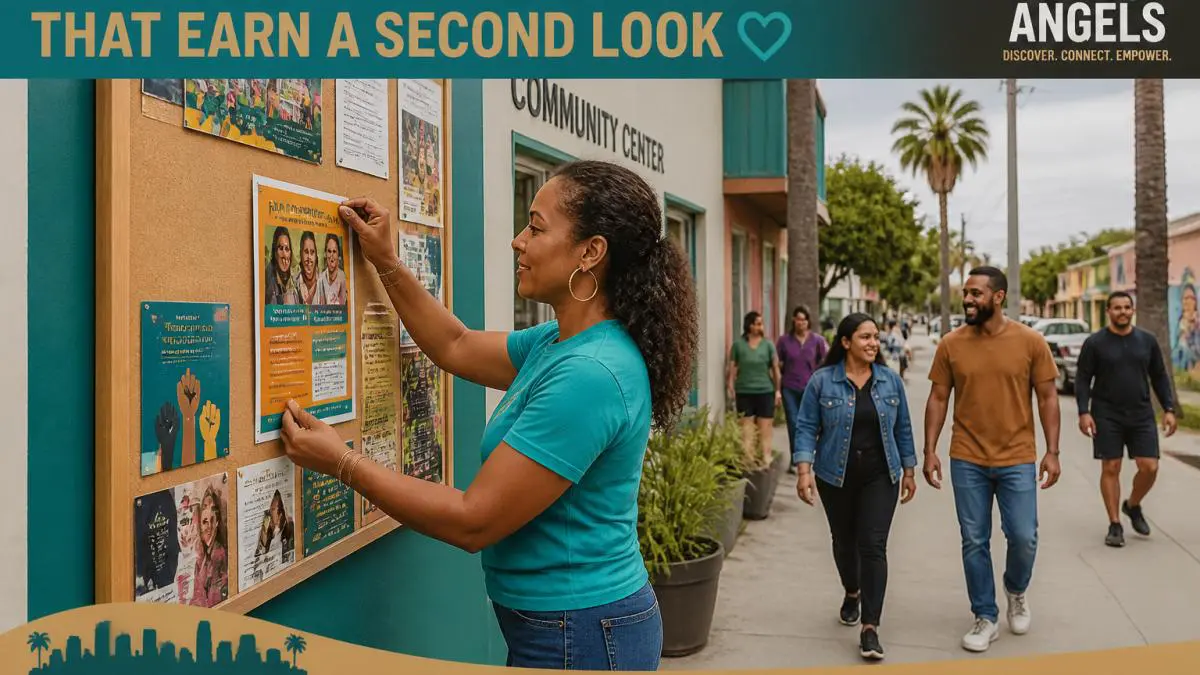
Keep flyers simple. One bold headline, the date and time, a clear location, and one line about who the event is for. Use high-contrast colors and a readable font. Add a QR code or short link so people can RSVP on the spot.
Low-Budget Tactics, Inclusive Outreach, and Measuring What Worked
Most of the strongest promotion is free or cheap. The trick is knowing what to do first when the budget is thin. Here is how I prioritize.
Free First
Start with what costs nothing but time. Partner with local businesses for co-promotion. Trade shoutouts with other event hosts who reach a similar crowd. Ask community leaders to share your listing with their members. Post in the neighborhood groups where you are a real participant, not a drive-by poster. These moves build trust and reach at the same time.
Low-Cost Next
When you have a little to spend, put it where you can see the return. Small paid tests on the platform where your audience already spends time. Printed flyers for the blocks around your venue. A simple boosted post to your surrounding neighborhoods. Keep each test small and measure cost per registration before you add more.
Paid Last, and Only With Proof
Do not scale paid until a channel has shown it brings people through the door. Reach is not the goal. Registrations and attendance are. See how to decide whether niche promotion is worth the spend.
Inclusive Outreach That Is Not an Afterthought
Make your outreach inclusive from the start. Offer event details in more than one language where your audience needs it. Note accessibility features clearly, including entry, seating, and quiet spaces. Say plainly who the event is for and who is welcome. People notice when a host has thought about them, and they show up for hosts who did.
Measure What Actually Happened
Track registrations and attendance by source, so you know which channel brought people through the door. Ask guests how they heard about the event at check-in. Keep a simple sheet, and compare results event to event. The number that matters is the gap between registrations and actual attendance. A channel that drives sign-ups but not show-ups is not working, no matter how good the reach looks.
Free tactics build the base. Low-cost tests prove a channel. Paid spend scales only what already works. Measure attendance, not just registrations, and you will know where your next dollar belongs.
Book Your Next Listing and Get Your Event in Front of the Right Crowd
Promotion is a rhythm, not a one-time push. Plan your audience, pick your channels, follow the timeline, and measure what works. Reach LA Angels is built to help local creators, planners, and organizers get seen by people who value authentic cultural experiences. Post your event with us. For help with event promotion, see Event Promotion Services for current options and a quote.
Frequently Asked Questions
What are the best ways to promote a community event?
Start with the people you already reach: your partners, your regulars, and the local groups that share your community’s values. Layer in a free listing on community calendars, a steady social media schedule, and printed flyers at the places your crowd actually visits. Track which sources bring people through the door so you know where to spend your time next year.
How far in advance should you promote a community event?
Eight weeks is a solid runway for a mid-size community event. Use the first few weeks to lock partners and set your date, then ramp up posting and reminders as the date gets closer. For smaller gatherings, four to six weeks can work if your network is active and your partners are committed.
How do you reach people who do not follow your social media accounts?
Go where they already are. Post flyers at barbershops, churches, laundromats, and local businesses that serve your community. Ask partner organizations to share your event in their newsletters and group chats. Personal invitations still move people more than a post ever will.
How can event organizers measure whether promotion worked?
Give each channel its own link or promo code so you can see which sources drive registrations and check-ins. Compare how many people signed up against how many showed up. Keep a simple sheet after every event so next year’s plan is built on what actually worked, not guesses.
