
How to Identify Authentic Cultural Event Organizers
Table of Contents
- Why Authenticity Matters in Cultural Events
- Red Flags That Signal an Inauthentic Organizer
- Questions to Ask Event Organizers Before You Commit
- What Community-Led Cultural Events Look Like
- Cultural Event Planning Best Practices That Prove Legitimacy
- How to Support Authentic Organizers Long-Term
- Frequently Asked Questions
Last Updated: October 18, 2026
Why Authenticity Matters in Cultural Events
Authenticity in cultural events isn’t just nice to have. It’s everything.
When you show up to a real community gathering, you feel it immediately. The energy is different. The people running it know their audience. They know the culture. They’re not performing, they’re stewarding something that matters to them.
Inauthentic organizers? They’re chasing trends or dollars. They extract value from culture without understanding it, without respecting it, and without giving back to the community that created it. That’s the difference between a cultural event and cultural appropriation dressed up as an event.
At Reach LA Angels, we’ve spent years watching authentic cultural event organizers. The authentic ones have staying power. They grow their audience organically. They become institutions in their communities. The inauthentic ones? They disappear after one or two events, leaving people disappointed and cynical.
This guide walks you through how to spot the difference. We’ll show you what real community-led cultural events look like, the red flags that signal an organizer is faking it, and the questions that separate the genuine from the performative.
Red Flags That Signal an Inauthentic Organizer
Not every organizer with good intentions is authentic. Some are just inexperienced. But some are deliberately misleading.
Here’s what to watch for:
They talk more about themselves than the community.
Real organizers center the culture, the artists, the community members. Inauthentic ones center their brand, their vision, their profit margins. Check their social media. Who’s featured? Whose story gets told? If it’s always about the organizer, that’s a problem.
Their “cultural connection” is recent or vague.
Ask them how long they’ve been involved in this community. If they can’t give you specifics, that’s a signal. Authentic organizers have roots. They’ve been showing up for years, not weeks. They know the history.
They have no community advisory board or local partnerships.
Real community-led events involve community members in decision-making. They partner with established local organizations, local artists, and grassroots groups.
Their events feel generic or interchangeable.
Authentic cultural events have a distinct point of view. They reflect a specific community’s values and aesthetic. If you could swap the name and the location and the event would still work exactly the same way, it’s not authentic. It’s a template.
They don’t address safety, inclusion, or accessibility.
Real organizers think about who might be left out. They have policies about harassment, accessibility for disabled guests, and inclusive programming.
They can’t articulate why this event matters beyond “it’s fun.”
Authentic cultural events serve a purpose. They celebrate heritage. They create space for underrepresented voices. They build community. If an organizer can’t explain the deeper why, they’re not grounded in authentic intention.
Questions to Ask Event Organizers Before You Commit
Before you buy a ticket or send your friends, do your homework. Ask these questions directly. Pay attention to how they answer, not just what they say, but how they say it.
About Their Community Connection
Start here. This is where authenticity lives or dies.
How long have you been involved in this community, and what’s your personal connection to the culture you’re celebrating?
Listen for specificity. Real answers sound like: “I grew up in this neighborhood,” or “I’ve been attending these events for ten years,” or “My family is from this culture and I’m honoring my heritage.” Vague answers like “I’ve always loved this culture” or “I discovered it a few years ago” should make you pause.
What community members, artists, or organizations helped shape this event?
They should be able to name people. Real events are built on relationships. If they say “we consulted with the community” but can’t name who, that’s a red flag. Authentic organizers credit their collaborators. They’re transparent about who influenced the vision.
How do you stay connected to this community outside of this event?
Do they attend other community events? Do they support local artists year-round? Do they have ongoing relationships with community organizations? Or do they only show up when they’re promoting their own event? Authentic organizers are embedded. They’re not tourists.
About Representation and Decision-Making
This is where you assess whether the organizer is actually centering the community or just performing it.
Who makes decisions about programming, pricing, and policies for this event?
If it’s just the organizer, that’s a problem. Real community-led events have input from community members, local artists, and representatives from the communities being celebrated. Ask specifically: is there a planning committee?
How do you ensure that artists and performers from the community are fairly compensated?
This matters. A lot. If the organizer can’t explain their payment structure or says “most performers volunteer,” dig deeper. Are there any paid positions? How much? Who decides? Authentic organizers make sure their community isn’t working for free while the organizer profits.
What’s your approach to accessibility and inclusion?
Ask about physical accessibility (wheelchair access, seating, bathrooms). Ask about sensory considerations (is there a quiet space? Are there content warnings?). Ask about affordability (are there sliding scale tickets? Are there free admission times?). Ask about cultural sensitivity (are there interpreters?
How do you handle safety and harassment at your events?
Do they have security? Do they have a code of conduct? What’s their process if someone feels unsafe or witnesses harassment? Can they name specific policies? Authentic organizers take this seriously. They’re not defensive about it. They have systems in place.
What Community-Led Cultural Events Look Like
Authentic cultural event organizers create real community-led cultural events that have a specific energy. Once you know what to look for, you’ll recognize it.
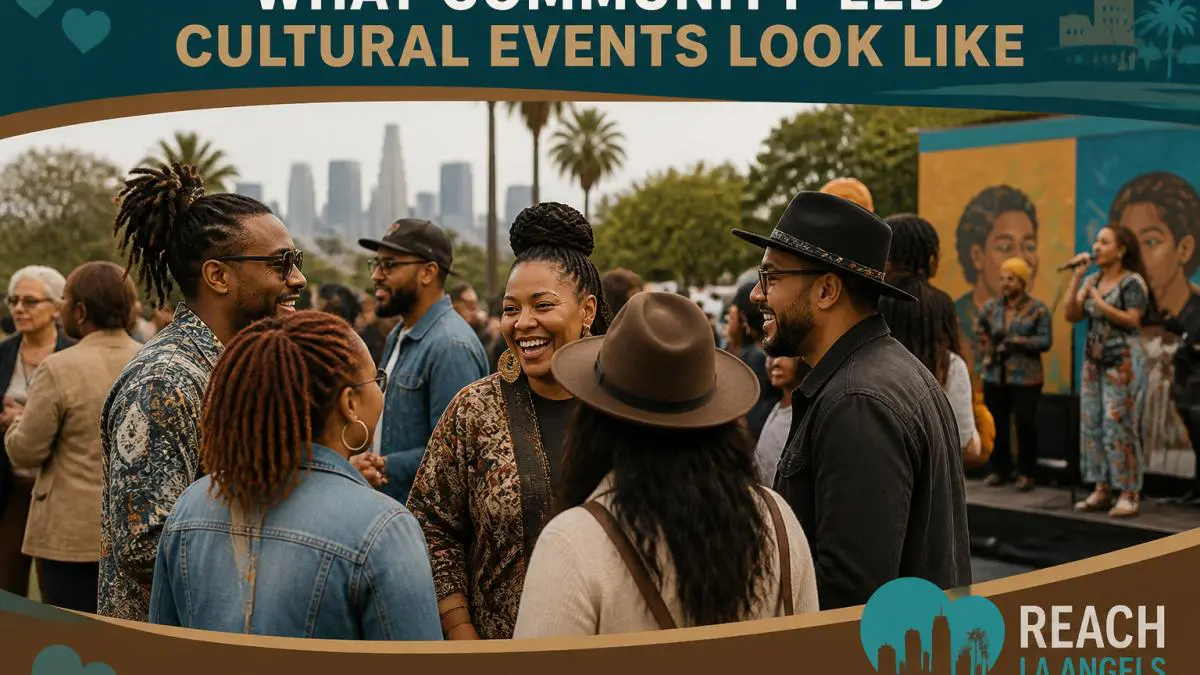
The space reflects the community’s aesthetic and values.
You can see it in the music, the food, the decor, the language used in marketing. It’s not trying to appeal to everyone. It’s unapologetically rooted in a specific culture.
Community members are visible in leadership roles.
You see local artists performing. You see community members working the door, managing the space, making decisions. It’s not all outsiders running the show. The community is steering the ship.
Accessibility is built in, not an afterthought.
There’s seating available. There’s a quiet space. There’s clear information about accessibility features. Pricing is transparent and often includes sliding scale options.
Safety and consent are prioritized.
There’s a clear code of conduct. There’s visible security or trained staff. There’s a process for reporting harassment or feeling unsafe. The organizer has communicated these policies clearly before the event.
The event gives back to the community.
Maybe a portion of proceeds go to a local organization. Maybe local businesses are featured. Maybe the event creates opportunities for community members to build their platforms or earn income.
Cultural Event Planning Best Practices That Prove Legitimacy
Talk is cheap. Planning leaves a paper trail. When you want to know if an organizer is legitimate, stop listening to the pitch and start reading the receipts, literally and figuratively.
Look for a published code of conduct, before the event, not after.
Legitimate organizers post their conduct, harassment, and accessibility policies where you can find them without asking.
Check whether the accessibility info is specific.
“Wheelchair accessible” is marketing. “Step-free entrance on the north side, accessible restroom on the main floor, quiet room available on request” is a plan.
Ask who is on the planning committee and how decisions get made.
Legitimate events have named collaborators, local artists, community organizations, cultural elders.
Verify the money flow.
You don’t need a full audit. You need to know: are performers paid, and how? Is there a stated split between artist pay, venue costs, and organizer margin?
Look at the track record, not the highlight reel.
How many events have they run? Over how many years? Do the same artists and community partners keep showing up?
Check whether they measure anything beyond attendance.
Serious organizers ask attendees and artists for feedback and can tell you what they changed as a result.
Bring these questions to the organizer directly. How they handle being asked, with specifics or with deflection, is often more revealing than the answers themselves.
Confirm they invest in their team.
Ask whether staff and volunteers get training on cultural competency, de-escalation, and trauma-informed practices. Legitimate organizers prepare people to hold community space. They don’t just hand out lanyards.
None of this requires special access. It requires asking plain questions and paying attention to whether the answers are concrete. That’s the whole test.
How to Support Authentic Organizers Long-Term
Finding a real organizer is step one. Keeping them alive is step two.
Put your money where your values are, directly.
Buy the ticket. Buy the merch. Tip the performers. Buy the music from the artists on the bill.
Show up consistently, not just for the big nights.
One-time attendance doesn’t build anything. Regular attendance does. The organizers who survive are the ones with a reliable core audience. Be part of that core.
Amplify the organizers, not just the event.
Share their posts, yes, but go further. Recommend them by name to friends, in group chats, in reviews. Word of mouth from people you trust still moves more people than any algorithm.
Support the whole ecosystem, not just the headliner.
Follow the artists. Go to their other shows. Support the local businesses the organizer partners with.
Pay attention to who’s in the room, and who isn’t.
Authentic organizers think about representation across race, ethnicity, gender identity, sexuality, and culture without treating any of those communities as interchangeable.
Hold them accountable, and do it with care.
If something wasn’t right, a safety gap, an accessibility miss, a performer who wasn’t paid fairly, tell the organizer directly. Real organizers want that feedback because they want to improve.
Flag the real ones for us.
If you find an organizer doing genuine community work, tell us. We also offer Event Promotion Services to help authentic organizers amplify their work and reach the audiences who care, and you can Explore LA & Surrounding Areas to discover more events and organizers doing real community work.
Support isn’t a one-time transaction. It’s a relationship, money, time, amplification, and honest feedback, repeated over years. That’s what keeps authentic organizers in business.
Frequently Asked Questions
How can you tell if a cultural event is authentic versus commercialized?
Authentic cultural events center the community’s voice in planning and decision-making. Check who’s organizing: Are they from the community they’re celebrating? Look at the lineup, do performers and speakers reflect the culture being honored, or are they generic entertainment? Authentic organizers prioritize cultural accuracy over profit margins. They involve community members in planning, credit cultural sources, and share proceeds fairly with performers and vendors. Commercialized events often hire outsiders to ‘curate’ culture, skip community input, and prioritize ticket sales over cultural integrity.
What questions should you ask a cultural event organizer?
Ask: Who are the core organizers and what’s their connection to this community? How were performers and speakers selected? Who profits from ticket sales, and how much goes back to artists and the community? Have community members been involved in planning? What accessibility measures are in place? How do they handle safety and consent at the event? Do they have a track record of events, and can they share testimonials? These questions reveal whether an organizer is genuinely rooted in the community or just extracting cultural capital.
How can you find culturally diverse and authentic events in Los Angeles?
Start by following organizers with deep community ties, check their social media history, not just their current event. Look for platforms dedicated to community-driven events that vet organizers for authenticity. Ask people in the community directly; word-of-mouth is the strongest signal. Attend smaller, neighborhood-based events first to build relationships with real organizers. Check if events are listed on community calendars, local nonprofits, or cultural organizations. Authentic organizers often build community gradually, not through flashy marketing, so the events with genuine buzz among locals are usually the real deal.
What are signs that a cultural event is tokenizing a community?
Tokenization happens when a culture is treated as decoration or entertainment rather than as lived experience. Red flags include: organizers who aren’t from the community; marketing that exoticizes or stereotypes; lineups that lack authentic representation; no community input in planning; profits going to outsiders; events that treat culture as a one-time novelty rather than ongoing celebration; and messaging that’s more about ‘discovery’ for outsiders than community connection. Authentic events center the community’s agency, respect, and economic benefit, not just their aesthetic appeal.
Finding authentic cultural event organizers takes work. But it’s work worth doing. The difference between a real community gathering and a commercialized performance of culture is real, and it matters. When you support authentic organizers, you’re investing in your community. You’re supporting local artists and creators. You’re participating in something that has real cultural value, not just entertainment value. That’s the kind of LA we want to build.