
Does Niche Event Promotion Increase ROI? A 2026 Guide
Table of Contents
- Niche vs. Broad Event Promotion: What Actually Changes ROI
- How to Calculate Event Marketing ROI Without Guessing
- Event Marketing Metrics That Show Whether Niche Targeting Works
- Event Promotion Best Practices for Niche Audiences
- When Niche Event Promotion Does Not Pay Off
- Post-Event Marketing Strategy: Turning One Night Into Pipeline
- Conclusion: Test Niche Promotion With Your Own Numbers
- Frequently Asked Questions
Last Updated: October 18, 2026
Niche vs. Broad Event Promotion: What Actually Changes ROI
Does niche event promotion increase ROI? Yes, when the audience is real and the offer fits them.
Here at Reach LA Angels, we see this play out every week.
Broad promotion buys reach. Niche promotion buys intent. That difference shows up in every line of your budget.
The catch: niche only pays off when you validate the crowd first.
Compare the Two on the Same Five Criteria
Most articles talk about niche marketing and event ROI separately. That is not useful. Put both promotion styles on the same scorecard and the trade-off gets honest.
Score each campaign on:
- Reach: how many people see the offer
- Cost per thousand reached: total spend divided by impressions, in thousands
- Lead quality: share of captured contacts who match your target audience
A common pattern: broad campaigns win on reach and lose on lead quality and conversion. Niche campaigns win on lead quality and revenue per attendee and lose on volume. Neither wins every line.
The Cost Mechanics Nobody Explains
Broad promotion spreads a fixed budget across a wide audience.
Niche promotion flips it. You pay more per impression because the audience is smaller and harder to reach. But your cost per qualified lead drops, because the people you reached already care.
Run the math on qualified leads, not raw impressions. That is where the ROI difference actually lives.
What Changes in the Budget
When you go niche, three budget lines shift:
- Paid reach goes down. You spend less on broad boosted posts and more on targeted placements.
- Partnership and community spend goes up. You pay in time, comps, and reciprocity with the groups that hold the crowd.
- Follow-up spend matters more. A smaller list means every contact is worth more, so post-event nurture earns its budget.
If your cost structure is built for a big general room, a niche event will look expensive on paper. Rebuild the budget around the room you can actually fill.
Niche promotion does not automatically raise ROI. It raises ROI when the audience is validated, the offer fits, and your costs are sized to the room. Miss any of those and you just bought a smaller crowd at a higher cost per head.
When Broad Still Wins
Be honest about the other side. Broad promotion still wins when:
- You are building first-time awareness and need volume
- The event genuinely appeals across segments
- You have no reliable way to reach the niche at scale
- Fixed costs are high enough that you need a big room to break even
The strongest play is usually a test: run a small niche campaign beside a broad one, score both on the five criteria, and let your own numbers settle the argument.
How to Calculate Event Marketing ROI Without Guessing
Event marketing ROI is the revenue an event generates minus total costs, divided by total costs, expressed as a percentage. The formula is simple: (Revenue – Cost) / Cost x 100. The hard part is counting every cost and crediting every dollar.
The Core Formula and What Counts as Cost
Most organizers undercount costs. They tally ads and the venue, then call it done. That hides the real number.
Count these:
- Ad spend across every channel
- Platform and ticketing fees
- Staff, host, and talent time
- Design, print, and content production
Revenue includes ticket sales, bar or vendor splits, sponsorships, and future sales from leads captured. Measure the whole picture, not just the door.
Attribution: Matching Ticket Sales to the Right Channel
Attribution is how you match each ticket to the channel that drove it. Without it, you cannot tell which promotion worked.
Use simple tools:
- Unique links or codes per channel
- A “how did you hear about us” field at checkout
- UTM tags on every social and email link
- Ask at check-in, and log the answer
One channel will usually carry most of the room. Find it, and put more weight there next time.
Set an Attribution Window Before You Spend
An attribution window is the stretch of time after someone first sees your promotion that you still credit that channel for the sale. Pick it before the campaign starts, not after, or you will argue with yourself later.
A practical approach:
- Short window for impulse buys: tickets sold within a few days of first touch
- Longer window for considered buys: group tickets, sponsor packages, and higher-priced events
- Log first touch and last touch: the channel that introduced the person and the one that closed them
Most organizers only credit the last click. That shortchanges the community partner or newsletter that planted the seed weeks earlier.
Account for Assisted Conversions
An assisted conversion is a sale where more than one channel touched the buyer before they purchased. Someone sees a partner’s post, gets your email, then buys through a link a friend shared.
If you only credit the final link, you will cut the channels that actually built the intent. Track every touch on the path, and give credit where it is earned.
Handle Long Sales Cycles Honestly
Not every dollar lands on event night. Sponsorships, group bookings, and future event sales can close weeks or months later. If you judge ROI only on door revenue, you will undervalue the channels that bring in the slow, high-value buyers.
Do this:
- Tag every lead with its source channel and audience segment
- Revisit the numbers at 30, 60, and 90 days after the event
- Count future sales from captured leads as part of the return
Tag every lead with the channel and the audience segment that brought them in. Six months later, that tag tells you which niche actually produced paying customers, not just attendees.
A Worked Example of the Method
Say a niche campaign brings in 200 leads. Half match your target audience. Of those 100 qualified leads, 40 buy. That is a 40% conversion rate on qualified leads. A broad campaign might bring 1,000 leads, with 100 qualified and 20 buying.
Run this comparison on your own numbers. The formula is easy. The discipline is in counting every cost, setting the window, and crediting every touch.
Event Marketing Metrics That Show Whether Niche Targeting Works
The metrics that prove niche targeting works are cost per lead, conversion rate, and revenue per attendee. Track these against a broad campaign and the gap becomes clear.
Watch these numbers:
- Cost per lead: what you spend to capture one contact
- Conversion rate: share of leads who buy a ticket
- Cost per acquisition: total spend divided by tickets sold
- Revenue per attendee: total revenue divided by heads in the room
Niche campaigns usually show fewer leads but stronger conversion and higher revenue per attendee. That is the trade. Fewer, better people beat a big crowd of wrong ones.
Tag every lead with the channel and the audience segment that brought them in. Six months later, that tag tells you which niche actually produced paying customers, not just attendees.
Event Promotion Best Practices for Niche Audiences
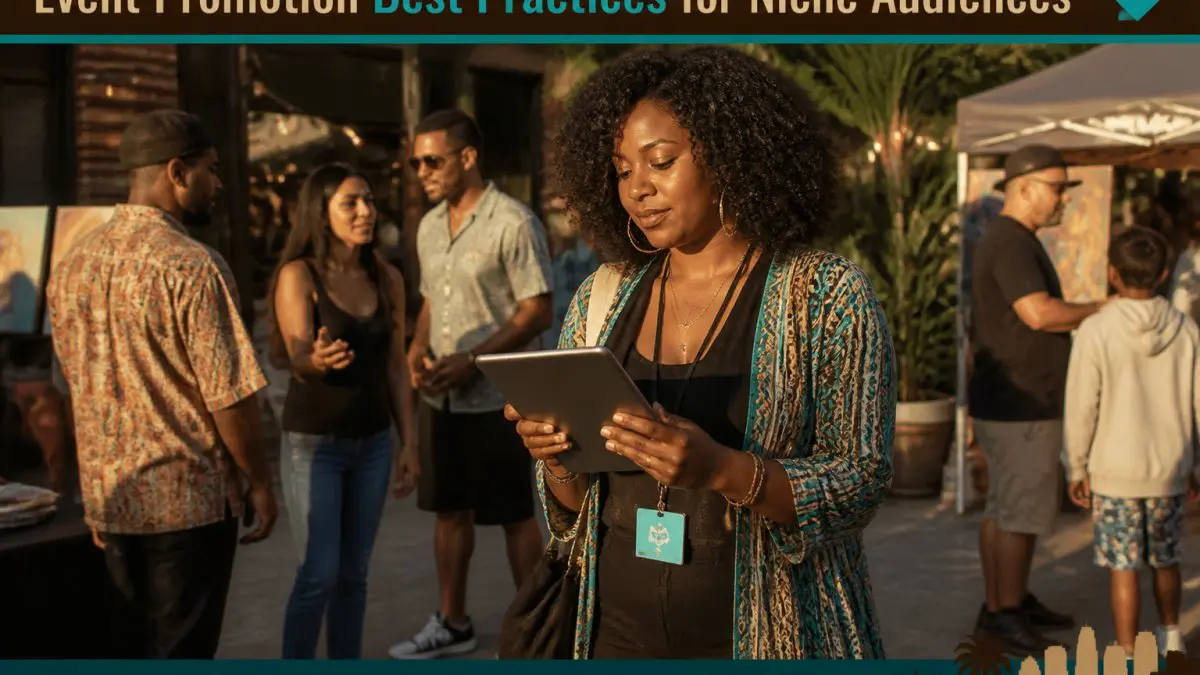
Event promotion best practices for niche audiences start with validation, then move to segmentation and channel fit. You confirm the crowd exists before you spend, then you speak to them where they already gather.
Validate the Audience Before You Spend
Validation means proving the audience exists and will pay before you commit budget. Test small first.
- Run a low-cost pre-sale or interest list
- Check whether similar events in your niche actually fill rooms
- Ask your list directly what they would attend
- Watch sign-up speed, not just sign-up count
If the interest list stalls, the niche is thinner than you hoped. Better to learn that before the venue deposit.
Segment Your List and Match the Channel to the Crowd
Segmentation means splitting your audience by interest, neighborhood, or past behavior, then sending each group the message that fits. A single blast to everyone wastes the niche advantage.
Match channel to crowd:
- Email for your committed regulars
- Social for discovery and sharing
- Community partners and group chats for trust
- A curated event platform for people already hunting cultural events
That last one is where Reach LA Angels fits. Our event promotion services put your listing in front of an audience that already wants authentic community experiences, not random scrollers.
The most common mistake is spending the whole budget on broad boosted posts before validating the niche. You get reach, no intent, and a quiet room on event night.
When Niche Event Promotion Does Not Pay Off
Niche event promotion fails when the audience is too small to fill the room, or when the offer does not match what that audience actually wants. A tight niche is not automatically a profitable one.
It does not pay off when:
- The niche is too thin to cover fixed costs
- The event is priced above what the audience will pay
- You picked a niche label but built a general event
- The channel you chose does not reach that crowd
A small, loyal crowd can still lose money if your costs are built for a big one. Match your spend to the room you can realistically fill.
Post-Event Marketing Strategy: Turning One Night Into Pipeline
A post-event marketing strategy turns one night into pipeline by following up fast, segmenting attendees, and tracking what each contact is worth. The event is the start of the relationship, not the end.
Do this within days:
- Send a thank-you with photos and a clear next step
- Segment attendees from no-shows
- Ask for reviews and referrals
- Offer the next event or a partner’s event
This is where ROI actually compounds. A niche crowd that had a real experience becomes your warmest list for the next event. That repeat pipeline is the strongest evidence that niche event promotion increases ROI over time.
Conclusion: Test Niche Promotion With Your Own Numbers
The real answer to whether niche event promotion increases ROI lives in your own data, not in a general claim. Run a small niche campaign next to a broad one.
When you are ready to reach an audience that already wants what you are building, Reach LA Angels can help. Our platform spotlights community-driven events and connects organizers to people who value authentic cultural experiences.
Frequently Asked Questions
Does niche event promotion increase ticket sales?
It can, but not automatically. Niche promotion raises the odds because your message reaches people already interested in that culture, genre, or community. The gain shows up when you validate the audience first, segment your list, and track cost per lead and conversion rate against a broad campaign. Run one event with both approaches and compare cost per attendee and revenue attribution. If the niche version brings cheaper qualified leads and higher conversion, it is working. If not, your targeting or channel choice needs fixing, not more spend.
How do you calculate ROI for an event promotion?
Add up every cost tied to the promotion: ad spend, platform fees, staff time, printing, and any comped tickets. Then subtract that total from the revenue the promotion generated, ticket sales plus sponsor value plus tracked follow-on sales. Divide the result by the promotion cost and multiply by 100 for a percentage. The hard part is attribution, so use unique promo codes, tracked links, and a post-event survey question asking where people heard about you. Keep the formula consistent across campaigns so comparisons mean something.
How do you compare a specialized event platform with a broad event listing site?
Compare them on audience fit, not raw traffic. A broad listing site reaches more people, but a specialized platform puts your event in front of users already searching for your kind of experience. Track cost per lead, conversion rate, and how many attendees came from each source. Ask each platform what audience data it can share and whether it supports first-party data capture at check-in. A smaller, engaged audience that shows up beats a large list that scrolls past.
What should organizers track after an event?
Track more than ticket sales. Pull attendance rate against RSVPs, cost per lead, conversion rate, revenue attribution by channel, and no-show percentage. Capture first-party data at check-in so you can follow up. Then watch post-event follow-up: email open rates, repeat attendance, and referred guests. Compare those numbers to your pre-event goals. The post-event window is where a lot of ROI gets won or lost, so give it the same attention you gave the promotion.