
Larry Parker’s: When a Beverly Hills Diner Became Part of L.A. Hip-Hop History
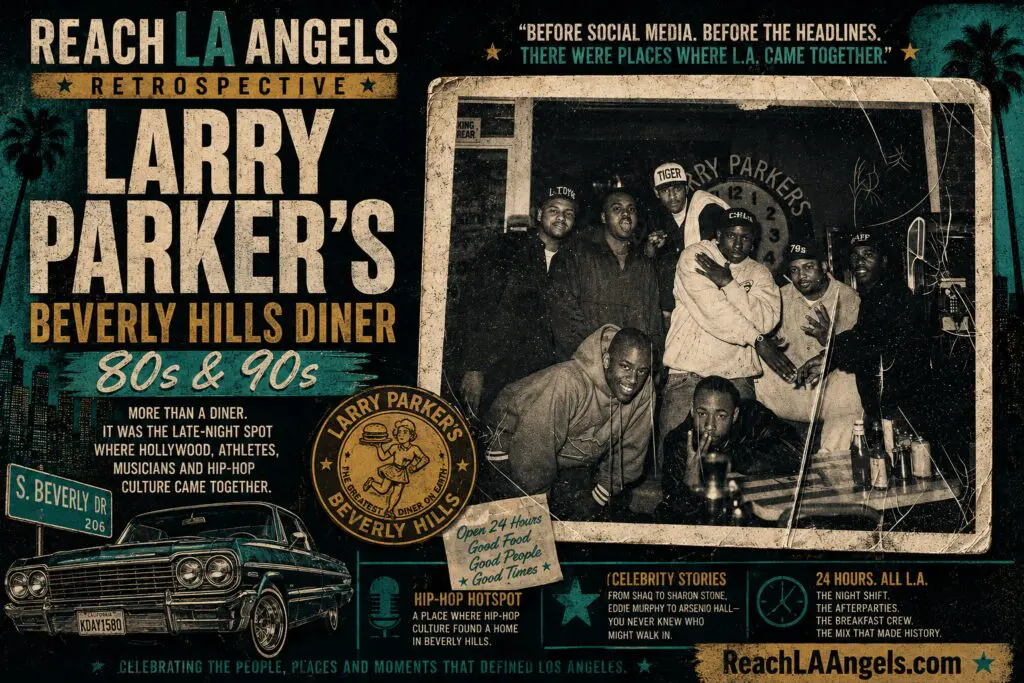
A ReachLA Angels Retrospective
By Kevin J Nelson
Before social media told you where the celebrities were, before TMZ cameras waited outside every Hollywood hotspot, and before Los Angeles nightlife became something you experienced through somebody else’s phone, there were certain places where you simply had to be.
In the 1980s and 1990s, one of those places was Larry Parker’s Beverly Hills Diner.
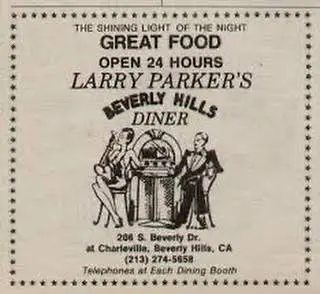
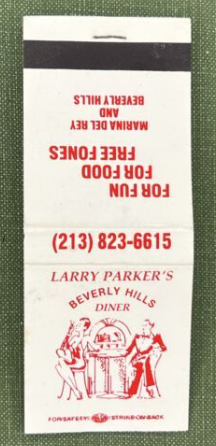
Located at 206 S. Beverly Drive at Charleville Boulevard, Larry Parker’s opened in 1982 and became one of those uniquely Los Angeles institutions where Beverly Hills glamour, Hollywood nightlife, young Black Los Angeles, hip-hop, athletes, musicians and everyday people could collide over burgers, fries, breakfast and milkshakes. An advertisement from the era promoted it as “The Shining Light of the Night,” emphasizing that it was open 24 hours and even had telephones at the dining booths.
That 24-hour schedule was everything.
When 2 A.M. Was Just the Beginning
Los Angeles has always been a city that changes personalities after dark. When the clubs started shutting down, the night did not necessarily end. People needed somewhere to go next.
Larry Parker’s became one of those places.
Former patrons remember heading there at two or three in the morning, when the dining room could become an unofficial after-party. One recollection describes Larry Parker’s in the early 1980s as the 24-hour Beverly Hills diner “where everyone went after the bars and clubs closed.” Another former customer remembered college nights ending there around 3 a.m.
But what made Larry Parker’s special was the mix.
You might see somebody coming from a Hollywood party sitting a few booths away from teenagers, musicians, actors, industry people or somebody who simply wanted breakfast in the middle of the night.
There was an accessibility to it that is increasingly difficult to imagine in celebrity-driven Los Angeles.
You did not need a velvet-rope connection once you walked through the door. Everybody needed a table.
Beverly Hills Meets Hip-Hop
For Reach LA Angels, this is where the Larry Parker’s story becomes particularly important.
Reader Break: Step Into Beverly Hills the Way the Legends Did
Before you dive back into the story, imagine seeing Beverly Hills and Hollywood the way the city’s icons once did. Larry Parker’s was where the night continued after the clubs, where actors, athletes, and hip‑hop artists crossed paths at 2 a.m.
If you’ve ever wondered what that world looked like from above, here’s your chance to experience it for yourself.
Hollywood & Beverly Hills Celebrity Helicopter Tour
A guided aerial experience that sweeps you over Beverly Hills, the Hollywood Sign, celebrity homes, and the skyline that shaped the nightlife era Larry Parker’s belonged to. I’ll add the button with your GetYourGuide link.
Affiliate Note: Some links on this page are GetYourGuide affiliate links, meaning Reach LA Angels may earn a small commission if you book — at no extra cost to you. Thank you for supporting our work and helping us keep L.A.’s cultural stories alive.
The restaurant was not merely another celebrity diner. It became connected to Los Angeles’ emerging hip-hop culture at a time when hip-hop itself was still fighting for recognition from mainstream entertainment.
LA Weekly later described Larry Parker’s as a 24-hour hip-hop diner, recalling a place that served Little League teams during the daytime but could have A Tribe Called Quest and Shaquille O’Neal coming through at night.
Think about what that represents.
This was Beverly Hills, one of the most famous symbols of wealth and exclusivity in America, yet inside Larry Parker’s a generation shaped by hip-hop was creating its own cultural space.
The diner also became intertwined with Funkee Phlavaz, the Beverly Hills High School-produced hip-hop television program that documented artists and culture during the 1990s. Larry Parker’s served as both a sponsor and one of the show’s filming locations.
That connection makes Larry Parker’s more than nostalgia.
It places the restaurant inside the story of young people in Los Angeles using television, music and their surroundings to participate in hip-hop’s rapid expansion.
You Never Knew Who Might Walk In
Celebrity sightings became part of the Larry Parker’s mythology.
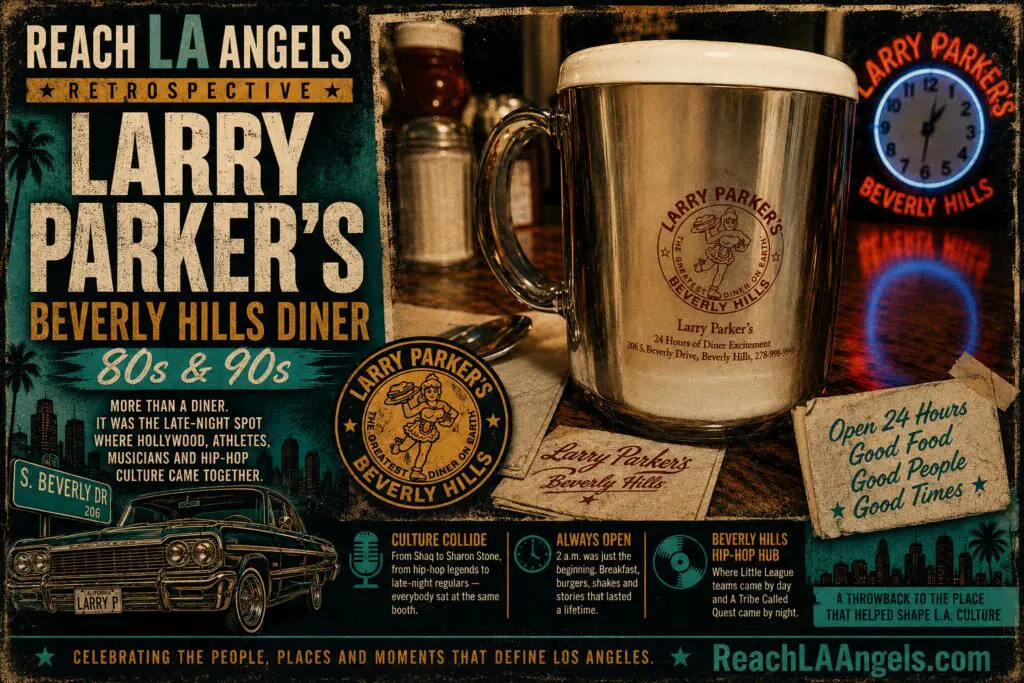
A 1993 Washington Post report about Los Angeles restaurant culture mentioned Sharon Stone stopping at Larry Parker’s for a giant shake. Other accounts connected the restaurant with everyone from Shaquille O’Neal and Arsenio Hall to Eddie Murphy.
Members of the Los Angeles rock scene remember it similarly. Jeff McDonald of Redd Kross recalled finishing late-night rehearsals in Beverly Hills and heading to Larry Parker’s, where seeing people such as Nicolas Cage was simply part of the experience.
That was the magic.
Larry Parker’s did not belong exclusively to Hollywood, hip-hop, rock, Beverly Hills teenagers or late-night club crowds.
It belonged to all of them at once.
And that combination gave the restaurant something money cannot manufacture: culture.
The Food Was Part of the Personality
Of course, you still had to eat.
Larry Parker’s was a classic American diner experience amplified through a Beverly Hills lens. Burgers, breakfast, shakes and oversized comfort food helped make it the kind of restaurant where somebody could arrive dressed from a night out and order food that felt completely unpretentious.
The milkshakes became particularly memorable. Later accounts of founder Larry Parker’s legacy specifically recalled the diner for its celebrity customers, vegetarian dishes and famous shakes.
But asking former customers what they remember about Larry Parker’s often produces something more interesting than a discussion about the menu.
They remember being there.
They remember who they were with.
They remember what time they arrived.
They remember looking across the room and realizing who was sitting three tables away.
That is how you know a restaurant became something bigger than a restaurant.
A Different Los Angeles
Larry Parker’s also represents an era of Los Angeles that has largely disappeared.
The city had celebrities, wealth and exclusivity, but there were still places where different worlds routinely crossed paths without everything immediately becoming content.
There were no Instagram Stories documenting who walked through the door.
Nobody was livestreaming the booth next to them.
You could encounter somebody famous at 2:30 in the morning, tell your friends about it the next day, and the story might remain among the people who were actually there.
Larry Parker’s existed during that transition from the 1980s into the 1990s when Los Angeles was becoming one of the centers of global hip-hop culture. N.W.A had changed the industry’s perception of West Coast rap. KDAY had given Los Angeles hip-hop a radio identity. By the 1990s, Dr. Dre, Snoop Dogg, 2Pac and an entire generation of West Coast artists had made Southern California impossible for the music industry to ignore.
And places like Larry Parker’s provided the social geography around that movement.
Not every important part of music history happens inside a recording studio.
Sometimes history happens in the booth where everybody goes after the club closes.
Fifteen Years That Left a Mark
Larry Parker operated his Beverly Hills diner from 1982 until 1997, according to accounts published after his death in 2013.
Fifteen years does not sound especially long when compared with some of Los Angeles’ century-old restaurants.
But those particular fifteen years mattered.
They covered the rise of MTV, the explosion of music videos, the emergence of West Coast hip-hop, the golden era of Black radio in Los Angeles, the transformation of rap into a dominant cultural force and a period when Beverly Hills and Hollywood nightlife were producing stories that would become part of L.A. folklore.
Larry Parker’s had a front-row seat.
Decades later, people still specifically name the diner when discussing the Los Angeles places they miss from the 1980s and 1990s.
That is a legacy.
The Parker Legacy Continues
There is another chapter to the story.
Larry Parker died in 2013 at age 62, but the family’s connection to Los Angeles restaurant culture did not disappear.
His son Casey Parker later became involved with Marathon Burger on Melrose Avenue, a restaurant created with Samiel “Blacc Sam” Asghedom, brother of the late Nipsey Hussle. In discussing the project, Parker specifically connected what they were building to his father’s Beverly Hills diner and its history as a gathering place for clubgoers, actors, rappers and musicians.
That connection is almost poetic.
One generation had Larry Parker’s.
Another generation had Nipsey Hussle’s Marathon movement.
Both understood something fundamental about Los Angeles: a neighborhood business can become much more than a place selling food. Done correctly, it becomes a meeting place, an incubator for relationships and eventually a piece of the community’s cultural memory.
Remembering Larry Parker’s
For those who never experienced it, Larry Parker’s might sound like another long-gone Los Angeles restaurant.
For those who were there, it was something else.
It was Beverly Hills after midnight.
It was breakfast at 2 a.m.
It was burgers and milkshakes after the club.
It was athletes and entertainers sitting within feet of regular customers.
It was young hip-hop culture finding space in one of America’s most famous ZIP codes.
It was the possibility that on any given night, you might walk through the door and leave with a story you would still be telling thirty or forty years later.
Los Angeles has lost countless restaurants over the decades. Most eventually become little more than names in old directories.
Larry Parker’s became a memory.
And if you experienced L.A. in the 1980s or 1990s, you understand the difference.
Reach LA Angels Retrospective
Celebrating the people, places and moments that helped define Los Angeles culture.
Recalled by Kevin J Nelson
2 responses to “Larry Parker’s: When a Beverly Hills Diner Became Part of L.A. Hip-Hop History”
-
Rất đáng đọc, cảm ơn tác giả. Công ty Letco cung cấp dịch vụ du học Hàn Quốc trọn gói, tư vấn tận tâm và minh bạch chi phí. Tìm hiểu tại letco.vn.
-
Thank you
-


Founder’s Closing
As we look back at places like Larry Parker’s the late‑night rooms where culture, community, and creativity collided. I’m reminded why Reach LA Angels exists. Los Angeles has always been shaped by the people who show up, who create, who gather, who make memories that last long after the lights go out. We honor that legacy by continuing to build spaces where today’s stories can unfold.
Stay Connected to the Culture
If you love celebrating L.A.’s past while experiencing the best of its present, make sure you check out our upcoming events. Join our Reach LA Angels Mailing Club to stay in the loop, get early access, and be part of the community keeping L.A.’s cultural heartbeat alive.
Let’s keep making moments worth remembering.

Discover the ultimate Textured Hair Care Essentials curated by Reach LA Angels — your go‑to collection for curls, coils, and natural hair that deserves premium care. This handpicked list features top‑rated Bask & Lather shampoos, conditioners, leave‑ins, curl creams, gels, oils, steamers, and styling tools designed to hydrate, define, and protect textured hair. Whether you’re rocking 3A curls or 4C coils, these products help you achieve moisture, shine, and long‑lasting definition. And please don’t forget to add the Heat Cap for Deep Conditioning to cart. This weekly treatment at home for just 20 minutes is a game charger for your hair hydration routine.
Explore the full list in our Reach LA Angels Storefront, tap the button, browse the essentials, and elevate your hair‑care routine with products trusted by curly‑hair communities everywhere.
Affiliate Disclaimer: As an Amazon Associate, Reach LA Angels may earn a small commission when you click and purchase through our links — at no extra cost to you. Thank you for supporting our work and helping us continue creating curated guides and cultural content.
Leave a Comment